What Is the Safest Safari for Families
July 29, 2026
When Does the Great Migration Happen
July 29, 2026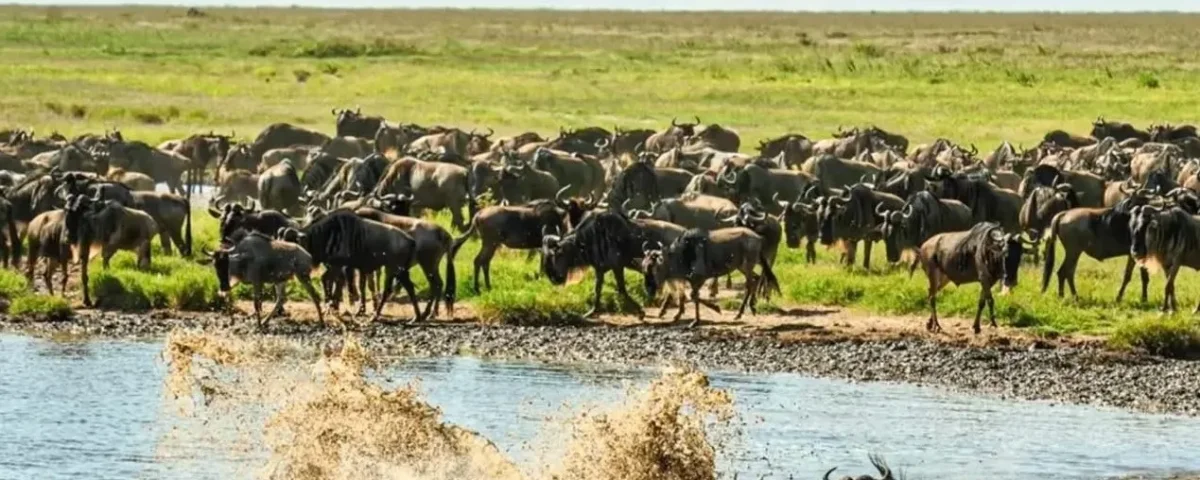
The Great Migration in Tanzania
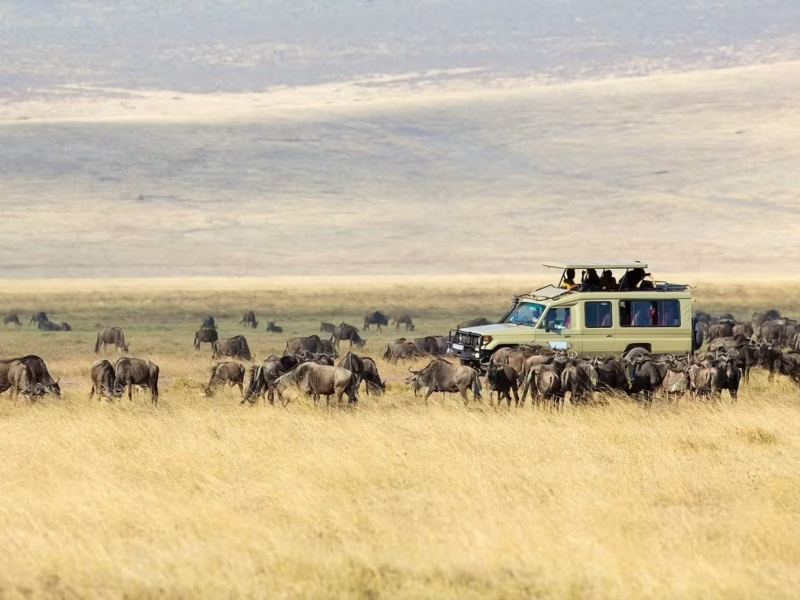
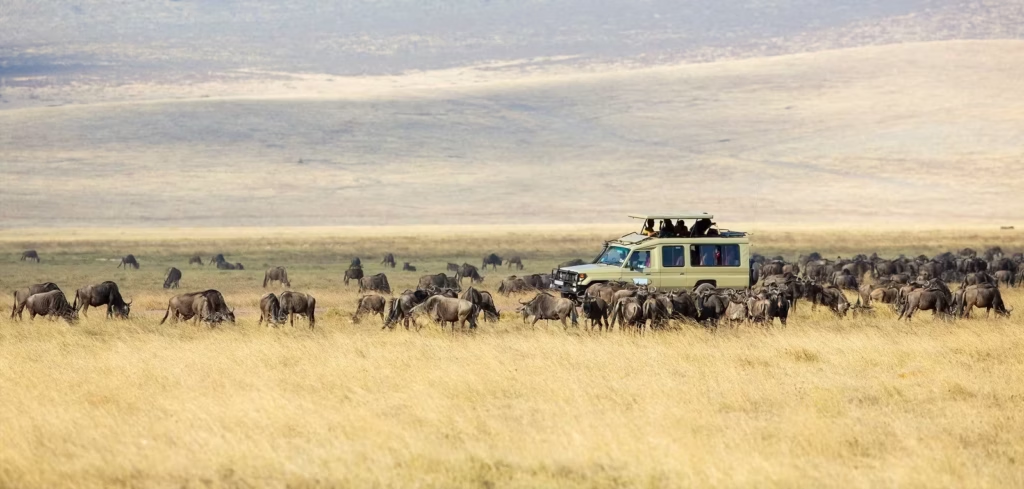
The Great Migration in Serengeti is one of the most remarkable wildlife events on Earth. Every year, millions of wildebeest, along with large numbers of zebras and gazelles, move across the plains of Tanzania and Kenya in search of fresh grass and water. This natural journey creates one of the most exciting safari experiences in Africa. However, the Great Migration involves much more than watching huge herds move across the landscape. It reveals the powerful connection between wildlife, seasonal rainfall, grasslands, rivers, predators, and survival.
For travelers visiting Tanzania, understanding the Great Migration can help them plan a safari that matches their interests and travel dates. The herds do not follow a fixed schedule, so their movements change according to rainfall and grazing conditions. As a result, different areas of the Serengeti offer different experiences throughout the year. Some travelers want to see huge herds gathering on the southern plains, while others hope to witness dramatic river crossings in the northern Serengeti.
A well planned migration safari therefore requires more than simply choosing a popular travel month. You need to understand the seasonal cycle, the location of the herds, the type of wildlife experience you want, and the level of travel flexibility you have. With the right planning, Tanzania can offer an unforgettable opportunity to experience one of nature’s greatest journeys.
Combined Uganda, Kenya, Rwanda and Tanzania Safaris
17 days Kenya Tanzania and Uganda safari
19 Days Uganda Kenya and Tanzania Safari
16 Days Kenya Tanzania and Uganda Safari
14 Days Kenya Uganda and Tanzania Safari
14 Days Kenya Uganda and Rwanda Safari
12 Day Gorilla Trekking and Tanzania Safari
Understanding the Great Migration in Tanzania
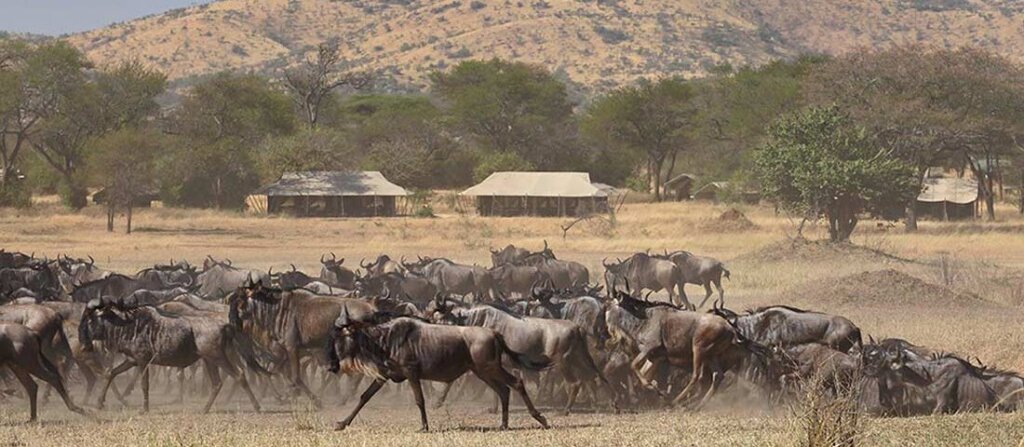
The Great Migration in Serengeti describes the continuous movement of enormous herds of wildebeest across the Serengeti ecosystem. The animals travel in a broad circular pattern as they search for fresh grazing and reliable water. Zebras and gazelles move alongside the wildebeest, creating a huge gathering of herbivores across the grasslands.
The migration does not happen because the animals simply choose to travel from one destination to another. Instead, seasonal rainfall drives the movement. When rain creates fresh grass in one area, the herds gather there to feed. As the grass becomes less nutritious and water sources change, the animals continue their journey toward areas with better resources.
This constant movement creates a dynamic ecosystem. Predators such as lions, cheetahs, leopards, and hyenas follow the herds because large numbers of prey create feeding opportunities. Crocodiles also wait near some rivers, while young animals face additional risks from predators and the difficult conditions of the journey.
The migration also supports a much wider ecosystem. Scavengers benefit from natural deaths, birds feed around grazing herds, and the movement of animals helps connect different habitats. Therefore, the Great Migration represents a complete ecological process rather than a single wildlife event.
For travelers, this means every migration safari can feel different. The landscape, weather, animal behavior, and herd location change throughout the year, creating a constantly evolving wildlife experience.
Why Do the Wildebeest Migrate Across Tanzania?
The main reason wildebeest migrate across Tanzania involves food and water. These animals need large amounts of fresh grass to survive, and seasonal rainfall determines where nutritious grazing becomes available. Instead of remaining in one location, the herds follow the natural cycle of rain and grass growth.
Wildebeest have adapted to this demanding lifestyle over thousands of years. Their journey allows them to take advantage of changing environmental conditions across the Serengeti ecosystem. Zebras and gazelles often travel alongside them because different species can feed on vegetation in slightly different ways.
The movement also helps animals find water during dry periods. However, water availability can change quickly, which means the herds must continue moving when local resources become limited.
Rainfall does not always follow exactly the same pattern each year. Consequently, the timing and location of the migration can shift. This explains why no responsible safari company can guarantee the exact location of the herds months in advance.
The migration also plays an important role in the natural balance of the ecosystem. As herbivores move through the grasslands, they influence vegetation and provide food for predators and scavengers.
For travelers, understanding this natural process makes the experience more meaningful. Instead of seeing the migration as a simple animal parade, visitors can appreciate the survival strategy behind every movement. The journey reflects how closely African wildlife depends on climate, rainfall, water, and healthy habitats.
Where Does the Great Migration Take Place in Tanzania?
The Great Migration takes place across the wider Serengeti ecosystem, with the largest movements occurring within Tanzania’s Serengeti National Park and surrounding areas. The ecosystem extends beyond park boundaries, allowing wildlife to move naturally between different habitats.
The southern Serengeti and Ndutu area often become important during the calving season. Later, the herds gradually move northward as they search for fresh grazing. During other parts of the year, the central Serengeti can provide excellent opportunities to encounter migrating herds alongside resident wildlife.
The western Serengeti also plays an important role in the migration cycle. The Grumeti River creates a major geographical feature that influences the movement of the animals. Further north, the herds eventually approach the Mara River and the northern Serengeti.
Each region offers a different atmosphere. Southern areas can provide open grasslands and opportunities to see young wildebeest during calving season. Central areas offer a strong mix of migrating and resident wildlife. Western areas provide river environments, while northern areas become important during the later stages of the annual movement.
Because the herds constantly move, travelers should choose their destination according to the season. A safari planner with current local knowledge can help match the itinerary to recent wildlife movements.
Therefore, the Great Migration in Tanzania does not belong to one single park or location. It represents a vast ecological journey that connects different parts of the Serengeti ecosystem.
The Great Migration Calving Season in Serengeti
The calving season represents one of the most extraordinary stages of the Great Migration. During this period, large numbers of wildebeest gather in the southern Serengeti and the wider Ndutu area, where seasonal rains encourage fresh grass growth.
For many travelers, this period offers a powerful wildlife experience because thousands of young wildebeest arrive within a relatively short period. The sight of mothers caring for newborn calves creates a completely different atmosphere from the dramatic river crossings that many people associate with the migration.
Calving also attracts predators. Lions, cheetahs, hyenas, and other carnivores recognize the presence of young animals as an opportunity for hunting. As a result, visitors may witness predator behavior and the constant struggle between survival and danger.
However, the calving season also highlights the resilience of the ecosystem. Not every young animal survives, but the birth of large numbers of calves helps maintain the population and supports the natural cycle of the Serengeti.
Families and travelers interested in photography often find this period especially rewarding. The open landscapes can provide beautiful views, while young animals create memorable scenes.
Nevertheless, the exact timing of calving can change because rainfall patterns vary. Travelers should therefore remain flexible and work with experienced safari professionals who understand seasonal conditions.
The calving season shows that the Great Migration is not only about dramatic movement. It also represents birth, growth, survival, and the continuation of one of Africa’s most important wildlife populations.
What Happens During the Great Migration River Crossings?
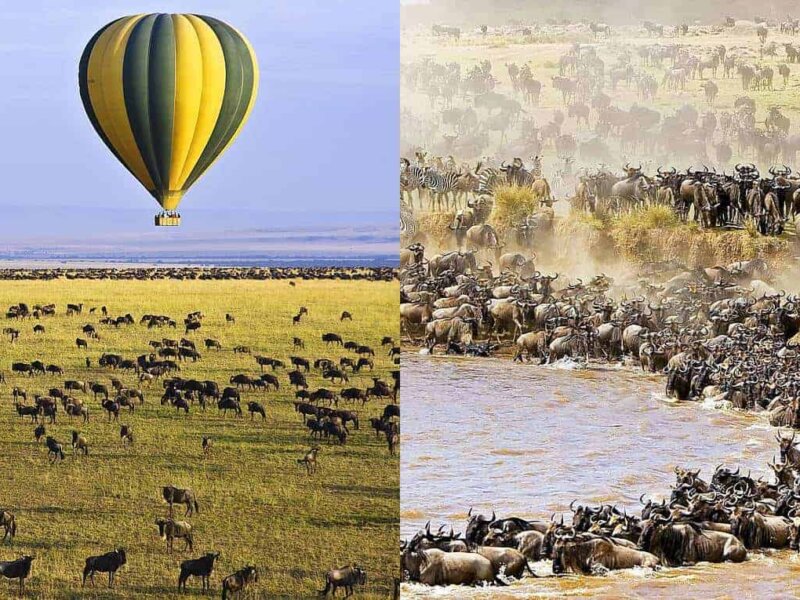
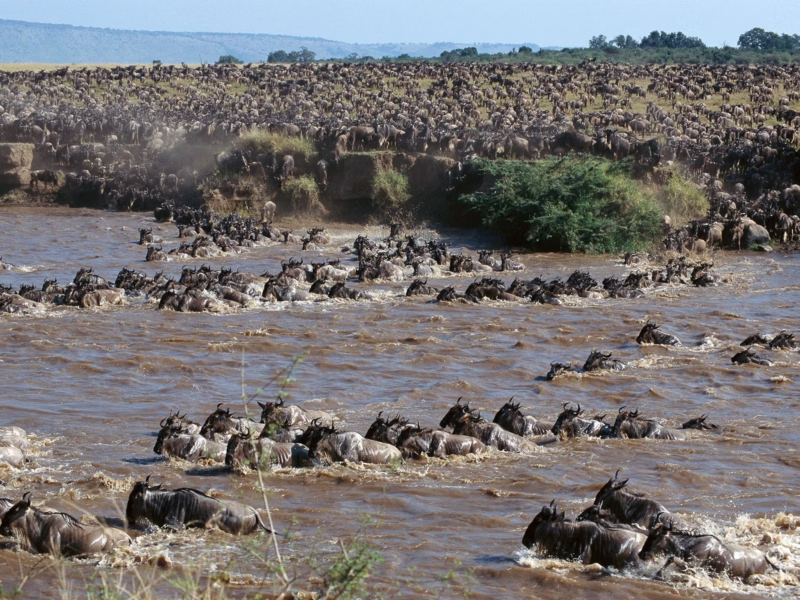
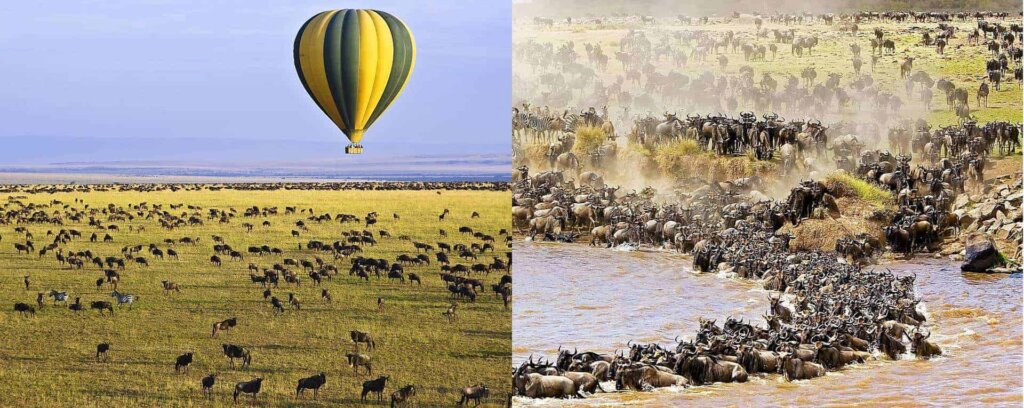
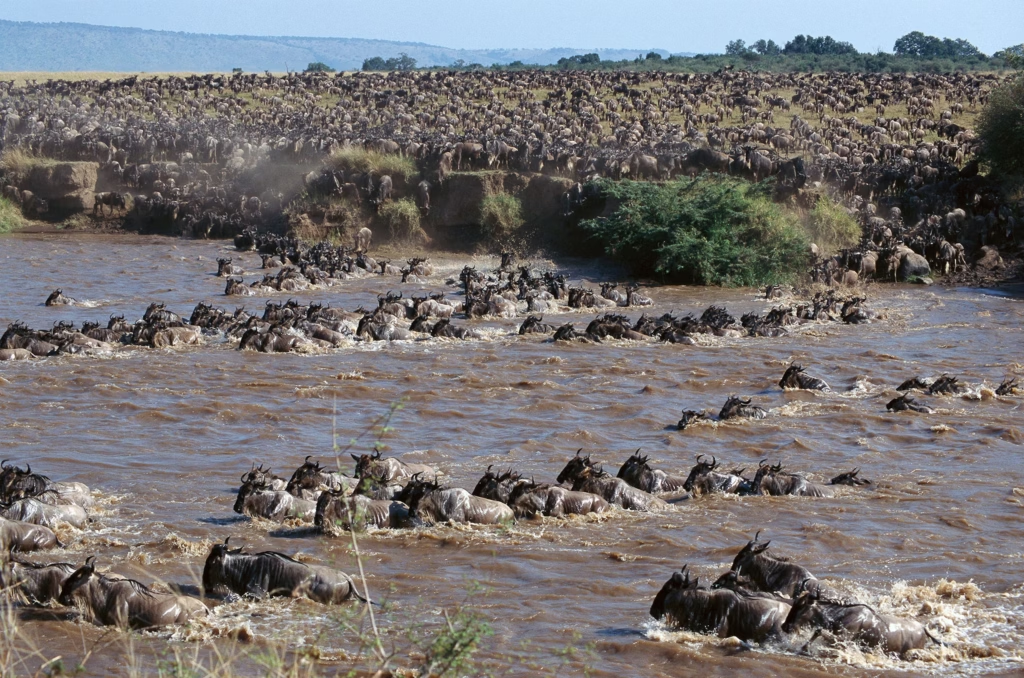
River crossings represent one of the most dramatic moments associated with the Great Migration. As the herds move northward, they encounter rivers that stand between their current grazing areas and the next stage of their journey.
The Mara River receives the most attention because large groups of wildebeest and zebras may gather near its banks before attempting to cross. However, river crossings remain unpredictable. Animals may wait for hours, turn back, or suddenly move across the water.
This uncertainty makes the experience exciting, but it also means travelers should avoid expecting a guaranteed crossing on a specific day. Nature does not follow a safari schedule.
When a crossing begins, hundreds or thousands of animals may move toward the river. The scene can become intense as animals navigate steep banks, strong currents, and deep water. Crocodiles may also wait in the river, adding another layer of danger.
Yet the crossing itself represents only one part of the migration. The animals must continue moving after reaching the opposite bank, often facing exhaustion and new challenges.
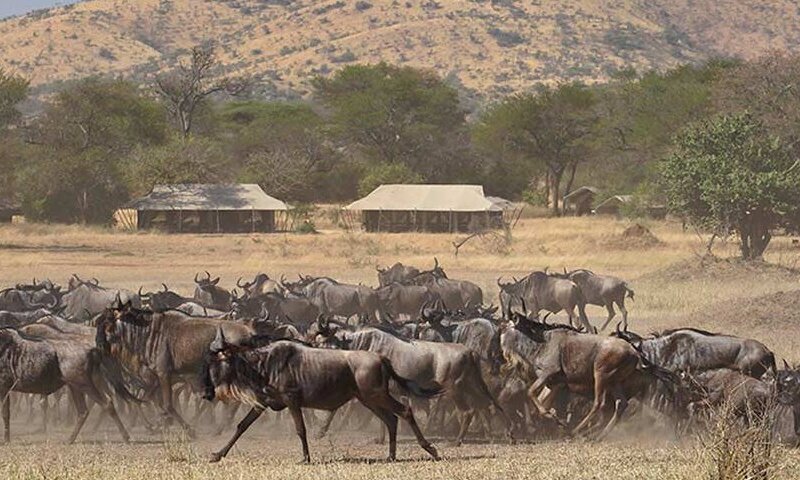
Travelers who want to experience river crossings should plan their safari around the northern Serengeti and choose accommodation based on recent herd movements. Mobile camps can provide an advantage because they can operate closer to seasonal wildlife areas.
The river crossing experience demonstrates why the Great Migration remains so compelling. It combines beauty, uncertainty, survival, and raw wildlife behavior in a single natural event.
When Is the Best Time to See the Great Migration in Serengeti?
The best time to see the Great Migration in Tanzania depends on what you want to experience. There is no single month that works for every traveler because the herds move through different areas during the year.
Travelers interested in calving may prefer the early months of the year when the southern Serengeti and Ndutu region can attract large herds. This period offers opportunities to see newborn wildebeest and increased predator activity.
Those who want to experience the movement toward the northern Serengeti may consider the middle months of the year. The herds gradually travel through central and western areas as they search for fresh grazing.
Travelers hoping to see Mara River crossings often focus on the later dry season. However, crossings remain unpredictable, and the presence of herds does not guarantee that animals will cross while visitors watch.
The shoulder seasons can also offer valuable safari experiences. Fewer visitors may create a quieter atmosphere, while changing weather can bring fresh greenery to parts of the ecosystem.
Therefore, travelers should choose their dates based on their preferred experience rather than simply following a popular travel calendar.
Giant Holiday Safaris can help travelers build a migration focused itinerary that considers seasonal herd movements, accommodation location, travel time, and wildlife priorities.
The most important lesson involves flexibility. The Great Migration follows nature, not a fixed timetable. A good safari plan therefore combines seasonal knowledge with realistic expectations.
How Does the Great Migration in Serengeti Affect Tanzania Safari Planning?
Planning a Great Migration safari requires a different approach from planning a standard wildlife holiday. Since the herds move continuously, the location of your accommodation becomes extremely important.
A lodge or permanent camp may provide excellent comfort, but its location remains fixed. Mobile camps can sometimes offer greater flexibility by moving with seasonal wildlife patterns.
Travelers should also consider how they will move between destinations. Road travel can provide opportunities to see additional wildlife, but some routes require long drives. Domestic flights can reduce travel time and make remote areas more accessible.
The length of the safari also matters. A longer trip provides more opportunities to encounter the herds and experience different regions. Shorter trips require more precise planning because travelers have less flexibility if the animals move away from the chosen area.
Seasonal weather also affects planning. Rain can influence road conditions and wildlife movements, while dry periods may make some areas easier to access.
Accommodation demand can increase during popular migration periods, so travelers should plan early when possible. However, early booking should not replace current local knowledge.
The strongest approach combines advance planning with flexibility. Travelers should know their preferred season and region while remaining open to changes in herd movements.
Ultimately, a successful migration safari depends on aligning three things: the season, the destination, and the traveler’s expectations.
Why the Great Migration in Serengeti Is Important to Tanzania’s Ecosystem
The Great Migration plays a major role in maintaining the health of the Serengeti ecosystem. Millions of grazing animals move through different landscapes, influencing vegetation and supporting a complex food chain.
As wildebeest and other herbivores feed on grass, they shape the structure of the grasslands. Their movement also distributes nutrients through the ecosystem. Natural grazing helps maintain the balance between vegetation and wildlife populations.
Predators depend heavily on the availability of herbivores. Lions, cheetahs, hyenas, and other carnivores benefit from the large numbers of prey moving through the ecosystem.
Scavengers and smaller animals also gain from the migration. Vultures and other scavenging species help return nutrients to the environment after natural deaths.
The migration also supports Tanzania’s tourism industry. Visitors from around the world travel to experience the wildlife spectacle, creating income that supports conservation, local communities, guides, hospitality workers, and tourism businesses.
However, protecting the migration requires careful management. Wildlife needs space to move, while tourism development must respect sensitive habitats.
Climate change, habitat loss, human population growth, and changes in water availability can affect wildlife movements. Conservation therefore requires cooperation between government authorities, conservation organizations, local communities, and responsible tourism operators.
When travelers choose responsible safari companies, they contribute to an industry that can support conservation and local livelihoods.
The Great Migration demonstrates that wildlife conservation and tourism can work together when stakeholders manage natural resources carefully and protect the ecosystem for future generations.
What Makes the Great Migration in Serengeti a Unique Safari Experience?
The Great Migration stands apart from many other safari experiences because it changes continuously. Travelers do not simply visit a location and observe animals that remain there. Instead, they enter an ecosystem where millions of animals move according to natural conditions.
This creates a sense of anticipation. Every game drive can bring something different. One day, travelers may watch large herds crossing open plains. Another day, they may observe predators following the movement of prey.
The scale also makes the experience unique. Seeing thousands of animals spread across the landscape creates a powerful impression that smaller wildlife encounters cannot always match.
However, the migration also teaches travelers about uncertainty. Animals may change direction, rainfall may arrive early or late, and river crossings may happen when visitors least expect them.
This unpredictability creates authenticity. The experience does not follow a script, and that makes each safari personal.
The migration also provides opportunities to learn about conservation. Travelers can understand how rainfall, grass, predators, rivers, and human activity interact within one ecosystem.
For photographers, the event offers endless subjects. For families, it provides educational opportunities. For wildlife enthusiasts, it offers a chance to observe natural behavior on a remarkable scale.
Ultimately, the Great Migration offers more than spectacular photographs. It creates a deeper connection between travelers and the natural world.
That connection explains why the migration continues to attract visitors who want to experience Tanzania beyond ordinary sightseeing.
How Can Travelers Experience the Great Migration Responsibly?
Responsible travel matters when visiting an ecosystem as important as the Serengeti. The Great Migration attracts many visitors, and responsible tourism can help reduce pressure on wildlife and sensitive habitats.
Travelers should choose safari companies that respect park regulations and maintain appropriate distances from animals. Guides should avoid chasing wildlife or creating stressful situations for animals simply to provide better photographs.
Visitors should also avoid leaving waste behind. Simple actions such as carrying reusable water bottles and reducing plastic use can support cleaner environments.
Supporting local communities also matters. Travelers can choose tourism businesses that employ local staff, work with community projects, and contribute to conservation.
Accommodation choices can also influence the environment. Eco-conscious camps and lodges may use solar power, manage water carefully, and reduce unnecessary waste.
Travelers should also respect local cultures. Tanzania is home to diverse communities with their own traditions and ways of life. Cultural experiences should involve respect, genuine interaction, and fair economic benefits.
Responsible tourism does not mean giving up comfort or enjoyment. Instead, it means making choices that protect the destination while creating meaningful experiences.
When travelers support responsible safari operators, they help strengthen the relationship between tourism and conservation.
The Great Migration belongs to the natural world first. Our role as visitors involves observing it with respect and helping protect the ecosystem that makes this extraordinary journey possible.
Planning Your First Great Migration Safari in Serengeti
Understanding the Great Migration in Serengeti helps travelers appreciate why this natural event remains one of Africa’s most extraordinary wildlife experiences. The movement of wildebeest, zebras, and gazelles across the Serengeti ecosystem reflects a powerful cycle driven by rain, grass, water, birth, survival, and predator activity.
The best safari experience depends on choosing the right time and location for your interests. Travelers who want to see newborn animals may focus on the southern Serengeti and Ndutu during the calving season. Those who dream of witnessing dramatic river crossings may plan around the northern Serengeti, while accepting that nature never guarantees an exact crossing date.
However, the Great Migration offers valuable experiences throughout the year. Even when the main herds move elsewhere, Tanzania’s Serengeti remains home to resident wildlife and diverse landscapes.
First time visitors should avoid planning their entire trip around one specific wildlife event. Instead, they should create an itinerary that offers several opportunities to enjoy the ecosystem.
A knowledgeable guide can make the experience even more rewarding by explaining animal behavior, conservation, and the seasonal changes that shape the migration.
Ultimately, the Great Migration in Tanzania represents much more than millions of animals moving across a map. It represents one of nature’s most powerful survival cycles and an opportunity for travelers to witness the remarkable connection between wildlife and the land that sustains it.