Combining Tanzania and Uganda Safaris
November 17, 2025
Which animals can I see in Queen Elizabeth National Park?
November 20, 2025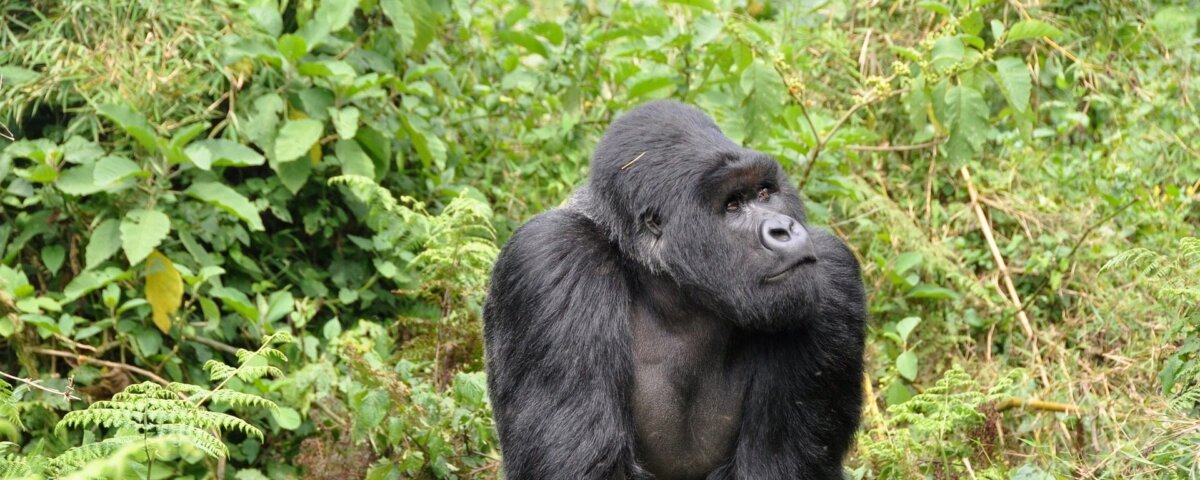
What is a gorilla afraid of?
What is a gorilla afraid of: despite their large size and strength are generally gentle creatures. However, like all animals, they do have fears. One of the main things gorillas are afraid of is unfamiliar or sudden loud noises. These can scare them and make them feel threatened. Similarly, they may feel uneasy around unfamiliar objects or situations as they prefer a stable and predictable environment.
In the wild, gorillas are cautious of predators such as leopards which are one of the few animals capable of preying on them. Although adult gorillas are strong and capable of defending themselves, they remain protective of their group especially the younger members.
Interestingly, gorillas can also be scared of water. While they are not afraid of rain, they tend to avoid crossing deep rivers or streams as they are not natural swimmers. This behavior likely stems from a sense of self-preservation. Overall, gorillas are more focused on maintaining peace and avoiding conflict, which is why they may appear cautious or fearful in certain situations. Their reactions are simply a way to protect themselves and their group in the face of potential danger.
More about What is a gorilla afraid of?
In addition to predators, gorillas can also be wary of unfamiliar humans. While some gorillas are habituated to human presence through conservation efforts and ecotourism, others may perceive humans as a threat, especially if they have had negative encounters in the past. This fear is not unfounded, as habitat destruction and poaching have posed significant threats to gorilla populations over the years.
Another fear for gorillas is environmental changes. They cause anxiety among gorillas. They are highly dependent on their forest habitat for food and shelter, so any alterations to their environment such as deforestation or climate change can create stress and fear. Gorillas rely on a diverse diet of leaves, fruits and stems meaning any disruption to their food sources can lead to uncertainty and unease.
Social dynamics within the troop can also be a source of fear for gorillas. Conflicts between members or challenges to the silverback’s authority can create tension and fear among the group. However, gorillas are generally peaceful animals that prefer to resolve disputes through displays of dominance rather than physical aggression.
To know more about what gorillas are afraid of, contact Giant Holiday Safaris.
What do gorillas do for fun?
Gorillas are fascinating creatures known for their intelligence, social behavior and striking similarities to humans. While they may appear serious at times, gorillas are far from boring. In fact, they engage in a variety of playful activities that showcase their fun-loving and curious nature. So, what exactly do gorillas do for fun? Let us look at the delightful world of gorilla playtime!
Playful interactions with each other
Gorillas are highly social animals that live in groups called troops. These troops are often led by a dominant silverback male and consist of females, juveniles and young gorillas. One of the primary ways gorillas have fun is through play with one another. Juveniles and young gorillas, in particular, are incredibly playful. They wrestle, chase each other and engage in mock fights much like human children do. These activities not only provide entertainment but also help young gorillas develop important social and physical skills. Even adult gorillas occasionally join in on the fun. You might see them playfully tugging on each other’s arms, rolling on the ground, or engaging in gentle sparring matches. These interactions help strengthen social bonds within the troop and create a sense of friendship.
Playing with objects
Gorillas are naturally curious and enjoy exploring their environment. They often play with objects they find in their habitat such as sticks, leaves, rocks or even water. For example, a gorilla might use a stick as a makeshift toy, waving it around or using it to poke at something interesting. Leaves can become props for games or even makeshift hats. Gorillas have been observed placing leaves on their heads and walking around as if showing off their new accessory. In zoos or sanctuaries, gorillas are often provided with enrichment items like balls, ropes or puzzle feeders to keep them mentally stimulated. Watching a gorilla figure out how to get a treat out of a puzzle feeder can be both impressive and entertaining. Their problem-solving skills shine as they manipulate objects to achieve their goals.
Climbing and Swinging
Gorillas are excellent climbers and they often incorporate climbing into their playtime. You might spot them scaling trees, swinging from branches or simply lounging in the treetops. Young gorillas especially love to climb and will often turn it into a game by chasing each other up and down trees or dangling from vines. Swinging is another favorite activity. In the wild or in captivity, gorillas will use vines or ropes to swing back and forth much like children on a playground swing. This activity not only provides entertainment but also helps them build strength and coordination.
Splashing in water
While gorillas are not very much lovers of water as some other primates, they occasionally enjoy splashing around in streams or shallow pools. This behavior is more commonly observed in younger gorillas who seem to find joy in creating ripples and watching the water move. In captivity, some gorillas have even been seen playing with hoses or sprinklers on hot days, delighting in the cool mist.
Mimicking and observing
Gorillas are incredibly intelligent animals that often mimic behaviors they observe in others whether it is another gorilla or even a human. This can lead to some amusing moments! For instance, a gorilla might mimic the way a caretaker walks or gestures. This behavior is not just a form of learning, it is also a way for gorillas to engage with their environment in a playful manner. In the wild, young gorillas learn by watching older members of the troop. While this is an essential part of their development, it can also lead to playful imitation. For example, if an older gorilla is seen using a tool or performing a specific task, a younger one might try to replicate it in a more lighthearted way.
Tickling and Laughter
Believe it or not, gorillas can laugh. When they are tickled or engaged in playful activities, they emit soft chuckling sounds that resemble laughter. This behavior is most commonly observed in young gorillas during playtime. Caretakers in zoos and sanctuaries have reported that tickling a young gorilla can elicit this adorable response, showing just how similar their expressions of joy are to our own.
Relaxing together
Sometimes, fun for gorillas is as simple as spending quality time together. After an active play session, you might find members of the troop lounging together, grooming one another or just enjoying each other’s company. Grooming is an important social activity for gorillas because it helps build trust and strengthen bonds within the group. While it may seem like a quiet activity compared to chasing or climbing, it is still an enjoyable way for gorillas to connect and relax.
Playing together
Playing is not just about having fun. It serves a vital role in a gorilla’s development and well-being. For young gorillas, playing helps them build physical strength, coordination and social skills. It also teaches them how to navigate relationships within the troop and prepares them for adult responsibilities. For adult gorillas, playing is a way to relieve stress and maintain strong social bonds. It is also a reminder that even the most powerful silverback has a lighter side!
How do you survive a gorilla attack?
Encountering a gorilla in the wild can be an awe-inspiring yet intimidating experience. Gorillas are powerful and intelligent animals and while they are generally peaceful, they can become defensive or aggressive if they feel threatened. Knowing how to behave in such a situation is crucial for your safety and the well-being of the gorilla. In our article below, we are going to talk about professional advice on how to survive a gorilla attack.
By understanding gorilla behavior
Before exploring into survival strategies, it is essential to understand gorilla behavior. Gorillas are social animals that live in groups, typically led by a dominant male known as a silverback. They are primarily herbivorous and spend much of their time foraging, resting, and socializing. While gorillas are not naturally aggressive, they are highly protective of their families and territory. Aggressive behaviors such as chest-beating, roaring or mock-charging, are often displays meant to intimidate rather than attack.
Staying calm and avoiding sudden movements
If you encounter a gorilla, the most important thing to remember is to remain calm. Gorillas are highly perceptive and can sense fear or aggression. Avoid panicking, screaming or running, as these actions may provoke the gorilla or trigger its instinct to chase instead, stand still or move slowly. Keep your hands at your sides or in a non-threatening position and avoid making sudden gestures that could be interpreted as aggression.
Not making direct eye contact
In the animal kingdom, direct eye contact can be perceived as a challenge or threat. When facing a gorilla, avoid staring directly into its eyes for prolonged periods. Instead, look downward or to the side while remaining aware of the gorilla’s movements. This signals that you are not a threat and can help de-escalate tension.
Adopting a submissive posture
To further communicate that you are not a threat, adopt a submissive posture like crouching down slightly to make yourself appear smaller, avoid standing tall or towering over the gorilla and keep your body language relaxed and non-confrontational. By appearing passive and unthreatening, you reduce the likelihood of provoking an aggressive gorilla response.
Respecting gorilla space
Gorillas are territorial animals and may perceive an intruder as a danger to their group. If you find yourself near a gorilla, respect its personal space by not approaching the gorilla or attempting to touch it. Furthermore, maintain a safe distance of at least 7 meters or 23 feet which is recommended by wildlife experts. If the gorilla moves closer to you, remain still and allow it to pass. Encroaching on a gorilla’s territory or attempting to interact with it can lead to defensive behavior.
Responding appropriately to threat displays
If a gorilla begins displaying signs of aggression such as chest-beating, roaring or mock-charging, it is crucial to respond appropriately by staying calm and avoiding aggressive reaction. Also, do not scream or run because this could escalate the situation. Lower your body and avert your gaze to signal submission. When a gorilla approaches, slowly back away if possible but do not turn your back on the gorilla. In most cases, these displays are meant as warnings rather than genuine attacks. By remaining composed, you can de-escalate the situation.
By not running
Running from a gorilla can trigger its instinct to chase as this behavior may mimic that of prey. Gorillas are incredibly fast and can easily catch up to a human. Instead of fleeing, stand your ground while remaining non-threatening or back away slowly.
Traveling with an experienced guide
If you are visiting an area known for its gorilla population such as national parks in Africa, it is highly recommended to travel with an experienced guide or ranger. These professionals are trained in gorilla behavior and can provide instructions on how to stay safe during gorilla encounters. They also help ensure that interactions with wildlife are conducted ethically and responsibly.
Following local guidelines
Many regions with wild gorilla populations have strict guidelines for visitors to minimize human-wildlife conflict and protect both parties. These may include wearing masks to prevent transmitting diseases to gorillas, maintaining a safe distance at all times and limiting the duration of interactions with gorillas. By adhering to these rules, you contribute to conservation efforts while ensuring your safety during gorilla trekking.
Knowing when to seek help
In rare cases where an encounter escalates despite your best efforts, seek help immediately if possible. If you are in a guided group, follow the instructions of your guide or ranger. They are trained to handle such situations and will know how to respond effectively. For more information on how you can handle a gorilla attack, contact Giant Holiday Safaris.