What is a gorilla afraid of?
November 20, 2025
What is the best season for spotting shoebill stork in Murchison Falls National Park?
November 20, 2025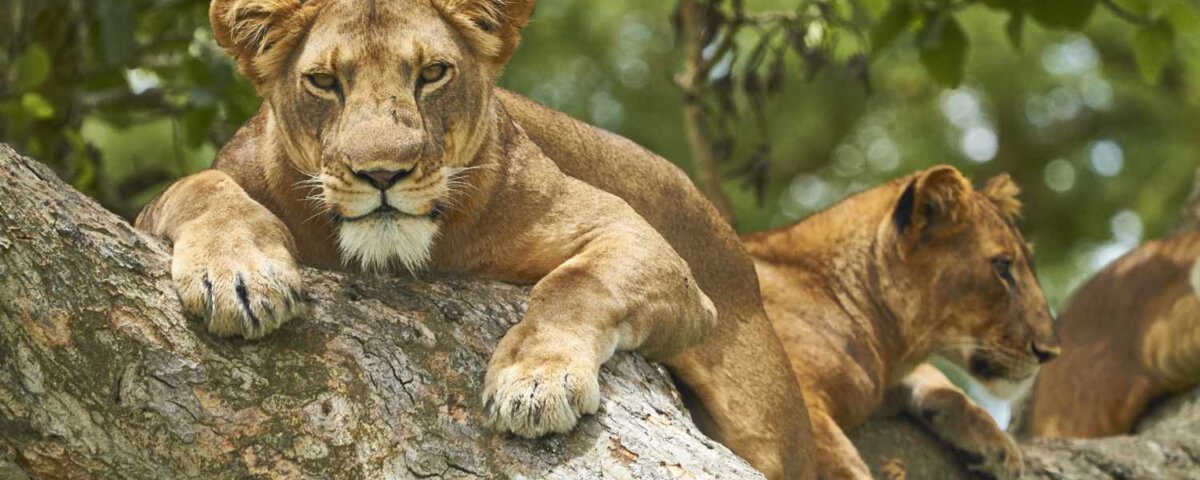
Which animals can I see in Queen Elizabeth National Park?
Which animals can I see in Queen Elizabeth National Park? Queen Elizabeth National Park in Uganda is one of the most biodiverse reserves in the world. Crossing over 1,978 square kilometers, this park is home to a wide variety of wildlife both large and small. Here are fascinating animals you can encounter in Queen Elizabeth National Park.
African elephants
The African elephants are the largest land mammals on earth and prominent residents of Queen Elizabeth National Park. Elephants can weigh up to 6,000 kilograms and are known for their intelligence and strong familial bonds. In Queen Elizabeth National Park, elephants are often seen grazing on grasslands or cooling off in water bodies. Their tusks, made of ivory are used for digging, stripping bark from trees and self-defense. Elephants contribute significantly to the ecosystem by creating pathways in dense vegetation and dispersing seeds through their dung. Their social structure is matriarchal with herds led by an experienced female.
Observing their interactions provides insight into their complex communication and emotional depth. Visitors to Queen Elizabeth National Park can spot elephants on game drives or near the Kazinga Channel where they gather to drink and bathe. Watching these gentle giants in their natural habitat is a humbling experience that underscores the importance of protecting them for future generations.
Lions are one of the Animals in Queen Elizabeth National Park
Lions are among the most iconic predators in Queen Elizabeth National Park, with the park being particularly famous for its unique tree-climbing lions. Found mainly in the Ishasha sector, these lions defy typical behavior by resting in fig trees during the day. This adaptation is believed to help them avoid biting insects and stay cool in the heat. The social structure of lions revolves around prides which consist of related females, their offspring and one or two dominant males. They are apex predators, preying on animals such as antelopes and buffaloes. Watching a pride in action is a thrilling experience that showcases their teamwork and hunting prowess. The tree-climbing lions of Queen Elizabeth National Park are a rare phenomenon, drawing wildlife enthusiasts from around the globe.
African buffalo are also one of the Animals in Queen Elizabeth National Park
African buffaloes are formidable herbivores that roam the savannas and woodlands of Queen Elizabeth National Park. Recognized by their massive horns and robust build, they often move in large herds for protection against predators like lions. These herds can number in the hundreds, creating an impressive sight for visitors. Buffaloes play a vital role in maintaining the grasslands by grazing extensively which prevents overgrowth and encourages new plant growth in Queen Elizabeth National Park. Despite their herbivorous nature, they are known for their unpredictable temperament and will aggressively defend themselves if threatened. Observing buffaloes at watering holes or grazing peacefully alongside other herbivores highlights the interconnectedness of wildlife within Queen Elizabeth National Park. Their presence underscores the importance of preserving diverse habitats to support such keystone species.
Leopards
Leopards are elusive and solitary big cats that call Queen Elizabeth National Park home. Known for their striking spotted coats and exceptional stealth, they are skilled hunters capable of taking down prey much larger than themselves. Leopards are most active during dawn and dusk, making them challenging but rewarding to spot. These cats are highly adaptable, thriving in various habitats within Queen Elizabeth National Park, from savannas to forests. They often drag their kills up into trees to keep them safe from scavengers like hyenas. This behavior demonstrates their intelligence and resourcefulness as predators.
While leopards are difficult to see due to their camouflage and nocturnal habits, lucky visitors may catch a glimpse during night game drives or near wooded areas. Their presence highlights Queen Elizabeth National Park’s rich biodiversity and its role as a sanctuary for predators.
Hippopotamus
The Kazinga Channel in Queen Elizabeth National Park is crowded with hippos, making it one of the best places in Africa to observe these massive semi-aquatic mammals. Hippos spend most of their time submerged in water to stay cool under the scorching sun. Despite their bulky appearance, hippos are surprisingly agile both in water and on land. They graze on grass at night and can consume up to 40 kilograms of food in a single feeding session. While they may seem docile, hippos are highly territorial and can be aggressive if provoked. Boat safaris along the Kazinga Channel in Queen Elizabeth National Park offer unparalleled opportunities to observe these animals up close. Their grunts and playful interactions in the water create a lively spectacle that visitors will not forget.
Nile crocodile
Nile crocodiles are top predators found along the shores of the Kazinga Channel and other water bodies within Queen Elizabeth National Park. These reptiles are among the largest crocodile species, capable of growing up to six meters in length. Crocodiles are ambush hunters, relying on their powerful jaws and stealth to capture prey such as fish, birds and mammals that come to drink at the water’s edge. Their role as top predators helps regulate populations of other species within aquatic ecosystems.
Observing crocodiles basking on riverbanks or gliding silently through the water reminds visitors of nature’s raw power. Their ancient lineage also makes them fascinating creatures to study from an evolutionary perspective.
Chimpanzee’s are also among the Animals in Queen Elizabeth National Park
Kyambura Gorge within Queen Elizabeth National Park is home to a small but significant population of chimpanzees. These primates share about 98% of their DNA with humans making them one of our closest relatives in the animal kingdom. Chimpanzees live in social groups called troops and exhibit complex behaviors such as tool use and vocal communication. Tracking them through the dense forest of Kyambura Gorge offers visitors a chance to witness their intelligence and social dynamics firsthand. Conservation efforts are critical for protecting chimpanzees from threats like habitat destruction and poaching.
Warthog
Warthogs are quirky and endearing members of Queen Elizabeth National Park’s ecosystem. Recognizable by their tusks and distinctive facial “warts,” these wild pigs are often seen grazing on grasslands or scurrying into burrows for safety. Despite their unassuming appearance, warthogs are resilient animals capable of surviving harsh conditions. They feed primarily on grasses but will also eat roots and bulbs when food is scarce. Their habit of kneeling while grazing is an amusing behavior often observed by visitors. Warthogs contribute to seed dispersal and soil aeration through their feeding habits. Their presence adds charm to game drives and highlights the diversity of herbivores within Queen Elizabeth National Park.
Ugandan kob
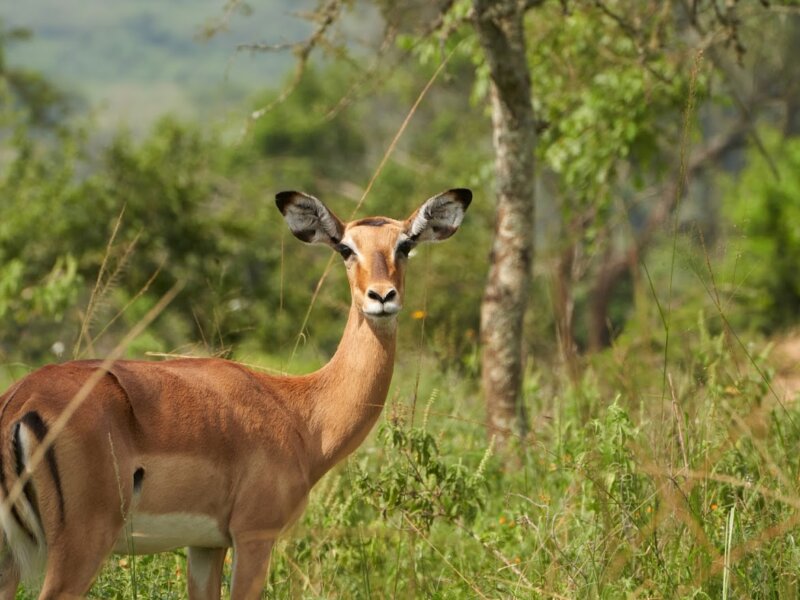
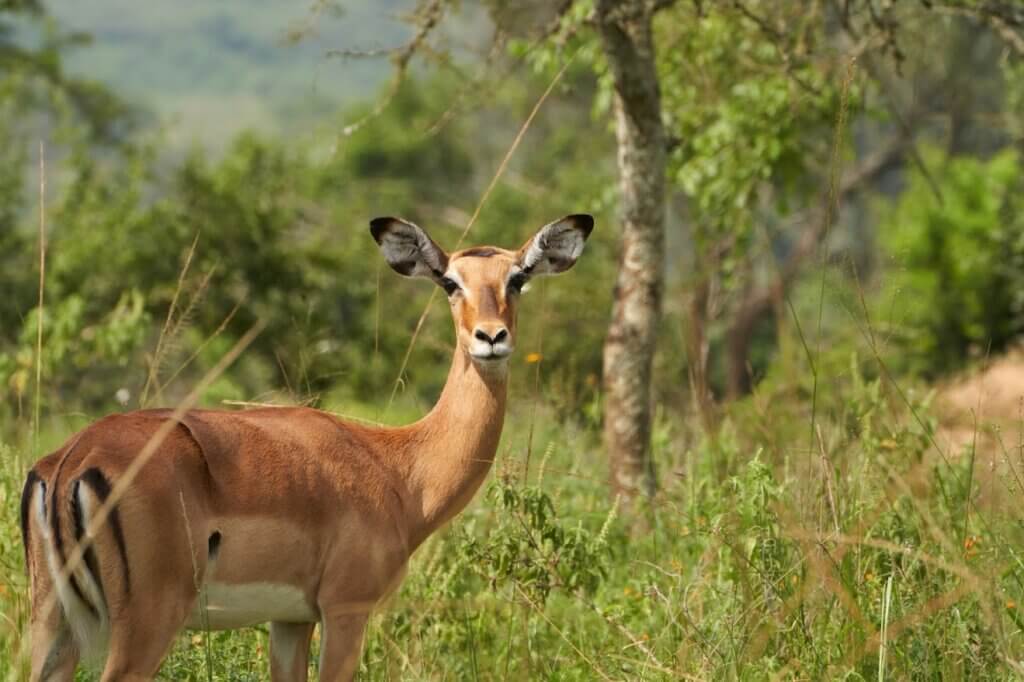
The Ugandan kob is a graceful antelope species that serves as a national symbol of Uganda. These animals are commonly found grazing on open savannas within Queen Elizabeth National Park. Male kobs are known for their striking horns and territorial displays during mating season while females form herds with their young for safety. Their agility and alertness help them evade predators like lions and leopards. Spotting Ugandan kobs against the backdrop of rolling grasslands is the best safari experience. Their abundance reflects the health of the Queen Elizabeth National Park’s ecosystem.
Hyenas
Spotted hyenas are opportunistic predators and scavengers found throughout Queen Elizabeth National Park. Known for their distinctive “laughing” calls, hyenas play an essential role in cleaning up corpses left behind by other predators. Hyenas live in clans led by dominant females, showcasing a rare matriarchal social structure among mammals. Their powerful jaws allow them to crush bones, extracting nutrients that other animals cannot access. Encountering hyenas during game drives in Queen Elizabeth National Park offers insight into their misunderstood behavior and ecological importance as nature’s cleanup crew.
Topi antelope
Topis are striking antelopes with reddish-brown coats and dark markings on their legs and faces. They prefer open grasslands where they can easily spot approaching predators. These animals are highly social, often forming herds that include other antelope species like Ugandan kobs. Their speed and agility make them challenging prey for predators like lions and cheetahs. Topis add vibrancy to Queen Elizabeth National Park’s landscape while contributing to its ecological balance as grazers.
Giant forest hogs
Giant forest hogs are the largest wild pigs in Africa found in forested areas within Queen Elizabeth National Park. These elusive animals are primarily nocturnal but can occasionally be spotted during early morning or late evening game drives. Their diet consists of roots, fruits and small plants making them important seed dispersers in forest ecosystems. Despite their size, they rely on dense vegetation for protection from predators. Seeing a giant forest hog is a rare treat for visitors due to their shy nature, adding an element of surprise to any safari adventure.
Waterbucks
Waterbucks are robust antelopes often found near water sources within Queen Elizabeth National Park. Their shaggy coats contain an oily secretion that repels water, allowing them to thrive in wet environments. These antelopes form small herds led by dominant males who defend territories near waterholes. Their presence attracts predators like lions, making them integral to predator-prey dynamics within Queen Elizabeth National Park. Waterbucks’ striking appearance and behavior make them a favorite among wildlife photographers visiting the park.
Grey-crowned crane
The grey-crowned crane is Uganda’s national bird and an unmistakable sight within Queen Elizabeth National Park’s wetlands. With its golden crown of feathers and elegant movements, this crane embodies grace and beauty. Grey-crowned cranes mate for life and perform elaborate courtship dances involving synchronized movements and calls. They feed on insects, seeds and small vertebrates found in marshy areas. Spotting these birds during a safari in Queen Elizabeth National Park adds a splash of color to the park’s diverse avian population while emphasizing its importance as a birdwatcher’s paradise.
Monitor lizard are among the to see Animals in Queen Elizabeth National Park
Monitor lizards are large reptiles frequently seen basking along riverbanks or scuttling through undergrowth within Queen Elizabeth National Park. These carnivorous lizards feed on insects, fish, small mammals and eggs. Their keen senses and agility make them effective hunters despite their seemingly sluggish appearance. Monitor lizards also play a role as scavengers, contributing to nutrient cycling within ecosystems. Observing these reptiles in their natural habitat provides insight into lesser-known but equally interesting members of Queen Elizabeth National Park’s wildlife community. To book a tour and watch animals in Queen Elizabeth National Park, contact Giant Holiday Safaris.
What is the best time to visit Queen Elizabeth National Park and why?
The dry seasons which occur from June to September and December to February are regarded as the best times to visit Queen Elizabeth National Park. During these months, rainfall is minimal and Queen Elizabeth National Park’s landscapes transform into a drier, less vegetated environment. This makes it easier to spot wildlife as animals tend to congregate near water sources like the Kazinga Channel, Lake Edward and Lake George.
The dry season comes with improved wildlife visibility. With reduced vegetation cover, animals are more visible in the open savannahs. Predators such as lions and leopards are easier to spot as they roam the plains or rest in trees. In addition, during dry months, water becomes scarce in certain areas of Queen Elizabeth National Park. This forces wildlife to gather around permanent water bodies like the Kazinga Channel, offering excellent opportunities for game viewing and boat safaris. The dry season is also characterized by warm days and cooler nights, making it more comfortable for outdoor activities such as game drives, nature walks and birdwatching. Additionally, Queen Elizabeth National Park ‘s roads and trails are more navigable during the dry season. For guided tours in Queen Elizabeth National Park, contact Giant Holiday Safaris.