Can I See River Crossings in Serengeti
July 29, 2026
How Many Wildebeest Migrate in Tanzania
July 29, 2026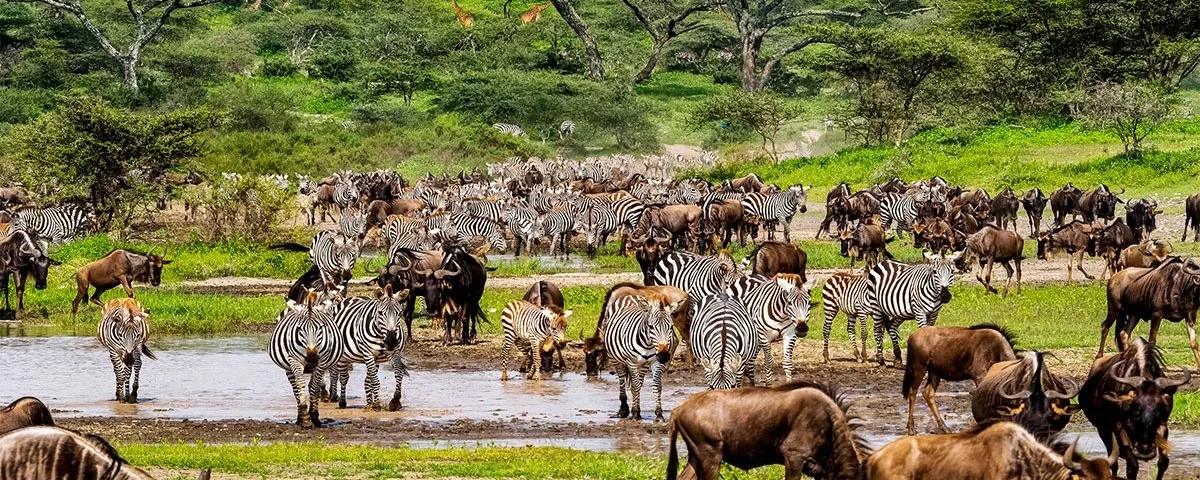
What Animals Migrate in Serengeti
Many travellers ask what animals migrate in Serengeti because they want to understand one of the world’s greatest wildlife spectacles before planning a Tanzania safari. Every year, millions of animals travel across the vast Serengeti ecosystem in search of fresh grass and reliable water. This remarkable movement, known as the Great Migration, creates unforgettable wildlife experiences that attract nature lovers, photographers, and adventure seekers from across the globe.
Although wildebeests receive most of the attention, they are not the only animals that participate in this incredible journey. Large herds of zebras and gazelles also travel alongside the wildebeests, forming one of the largest land animal migrations on Earth. Together, these animals move through different parts of the Serengeti before crossing into Kenya’s Maasai Mara and eventually returning to Tanzania as seasonal rains change.
The migration is much more than a simple movement from one place to another. It supports the entire Serengeti ecosystem by providing food for predators, enriching the soil, and maintaining the natural balance that has existed for thousands of years. Every stage of the migration tells a different story of survival, teamwork, and adaptation.
Planning a safari with experienced specialists helps travellers experience the migration at the right time and in the right location. Giant Holiday Safaris designs carefully planned itineraries that maximise opportunities to witness these incredible wildlife movements while providing comfortable accommodation and knowledgeable safari guides.
Understanding what animals migrate in Serengeti allows visitors to appreciate the full beauty of this extraordinary natural event and enjoy a richer safari experience throughout Tanzania.
Combined Uganda, Kenya, Rwanda and Tanzania Safaris
17 days Kenya Tanzania and Uganda safari
19 Days Uganda Kenya and Tanzania Safari
16 Days Kenya Tanzania and Uganda Safari
14 Days Kenya Uganda and Tanzania Safari
14 Days Kenya Uganda and Rwanda Safari
12 Day Gorilla Trekking and Tanzania Safari
What Animals Migrate in Serengeti?
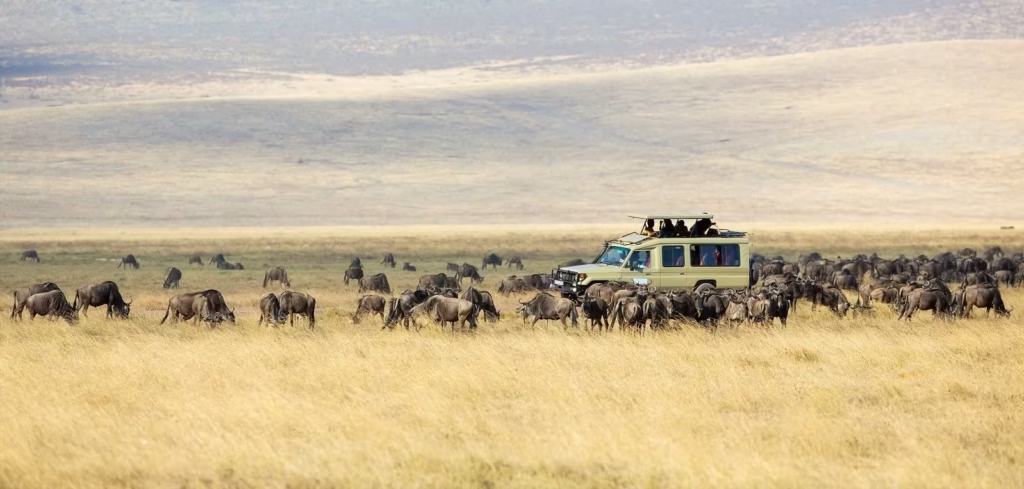
The answer to what animals migrate in Serengeti begins with three main species that form the heart of the Great Migration. These are wildebeests, zebras, and Thomson’s gazelles. Together, they travel across the Serengeti ecosystem in enormous numbers while following seasonal rainfall and fresh grazing areas.
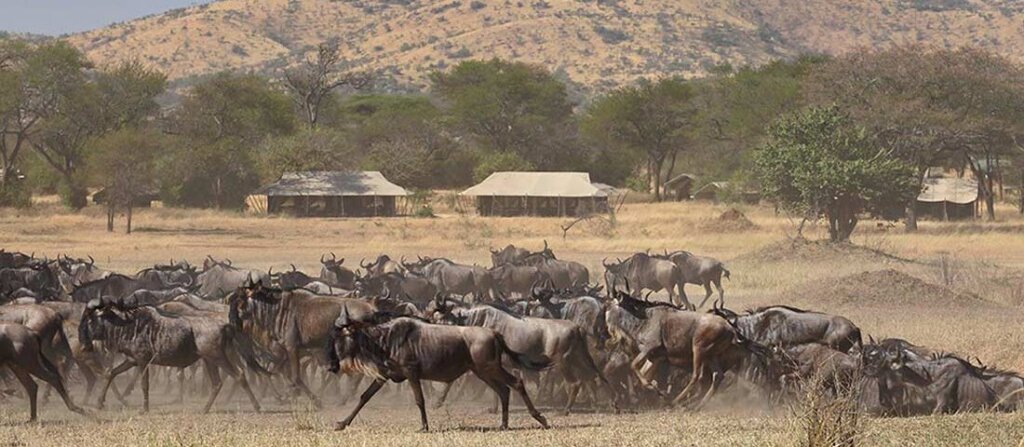
Wildebeests make up the largest part of the migration. More than 1.5 million wildebeests lead the journey each year, creating the massive herds that have become famous around the world. Their constant search for nutritious grass drives the migration and influences the movement of many other animals.
Zebras travel closely alongside the wildebeests. Their strong eyesight and alert behaviour help protect the herds from predators. Unlike wildebeests, zebras eat longer grass, making them valuable companions because they prepare grazing areas for the wildebeests that follow behind.
Thomson’s gazelles also participate in the migration, although they usually travel in smaller groups within the larger herds. Their speed and agility help them avoid predators while contributing to the remarkable diversity of animals moving across the plains.
Although these three species form the main migration, countless other animals benefit from this annual movement. Predators such as lions, cheetahs, leopards, hyenas, and crocodiles closely follow the herds because they provide abundant hunting opportunities. Birds also gather in large numbers to feed on insects disturbed by the migrating animals.
Together, these species create one of Earth’s most fascinating wildlife ecosystems, where every animal plays an important role in maintaining the natural balance of the Serengeti.
Wildebeests Lead the Great Migration
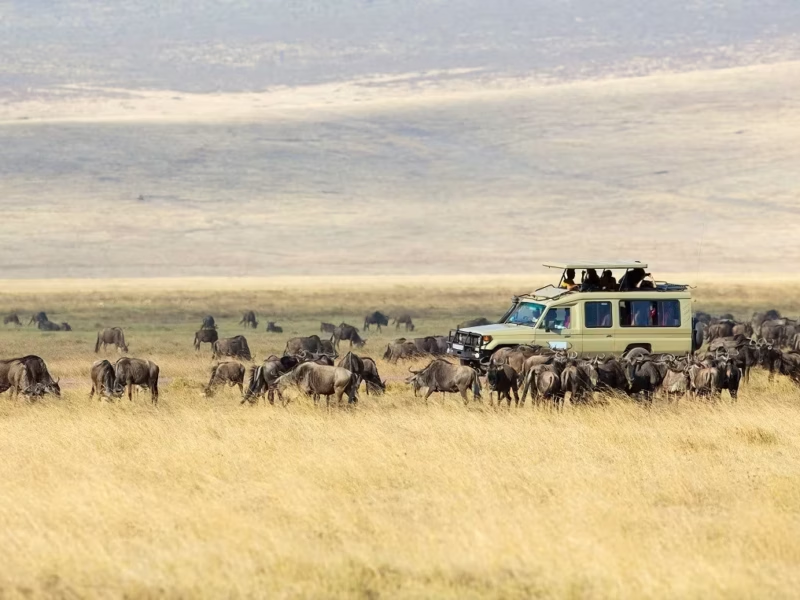
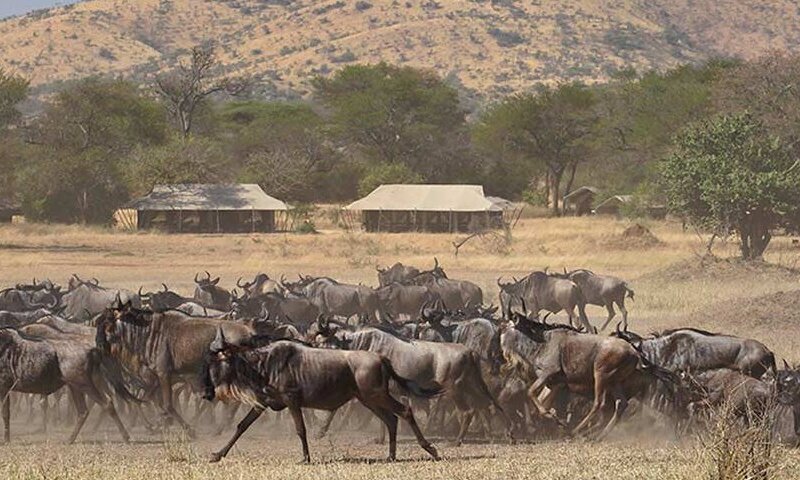
Wildebeests are the undisputed leaders of the Great Migration. Every year, more than 1.5 million of these remarkable animals travel across Tanzania and Kenya, making them the largest migrating mammal population in Africa. Their movement shapes the entire migration and influences nearly every other species within the Serengeti ecosystem.
The migration begins because wildebeests constantly search for fresh grass rich in nutrients. Seasonal rainfall determines where this new vegetation grows, so the herds naturally move toward the most suitable grazing areas. Their survival depends on finding enough food and water throughout the year, making continuous movement essential.
One of the most remarkable events involving wildebeests occurs during the calving season between January and March. During this short period, hundreds of thousands of calves are born across the southern Serengeti plains. Newborn calves stand within minutes and begin walking shortly afterwards because they must keep pace with the moving herds almost immediately.
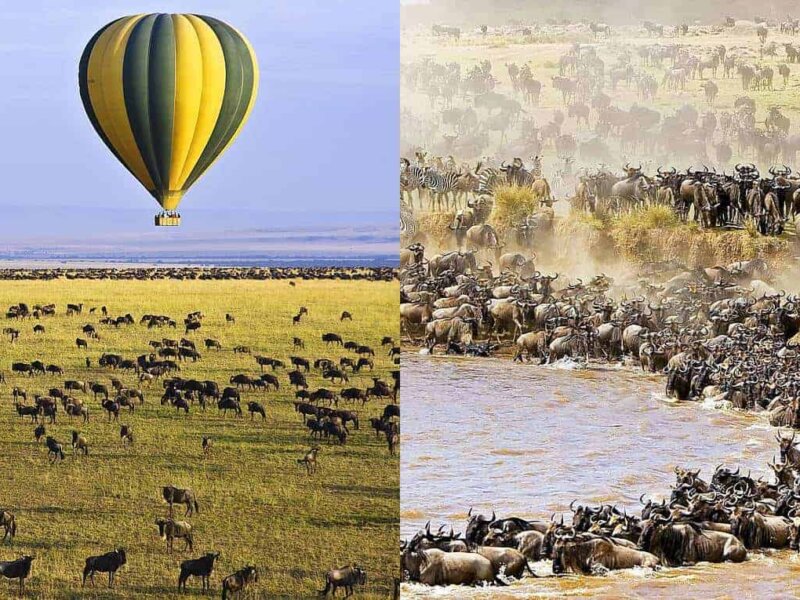
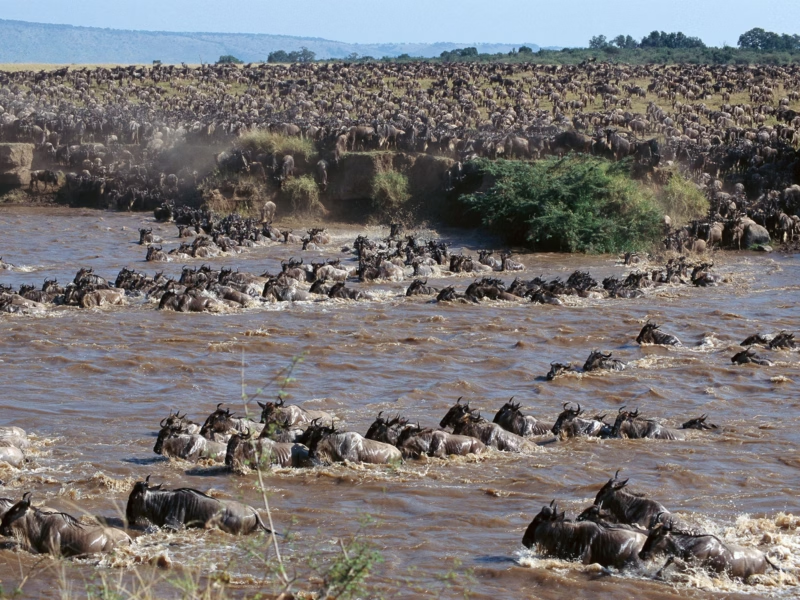
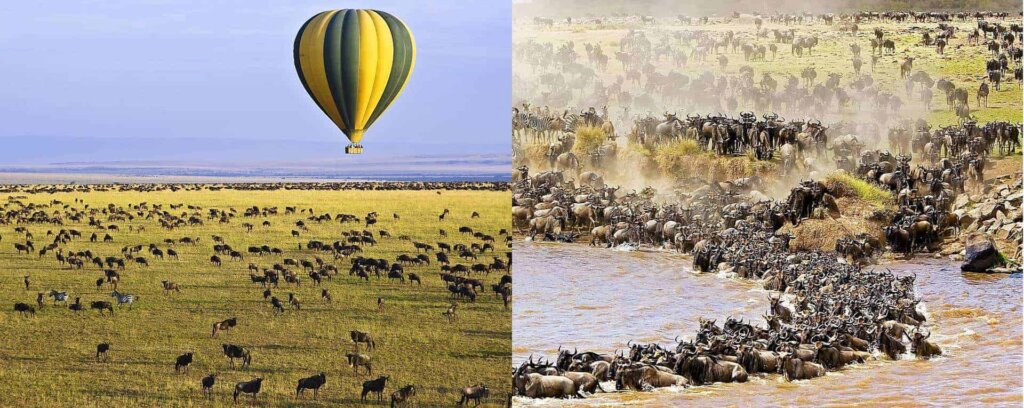
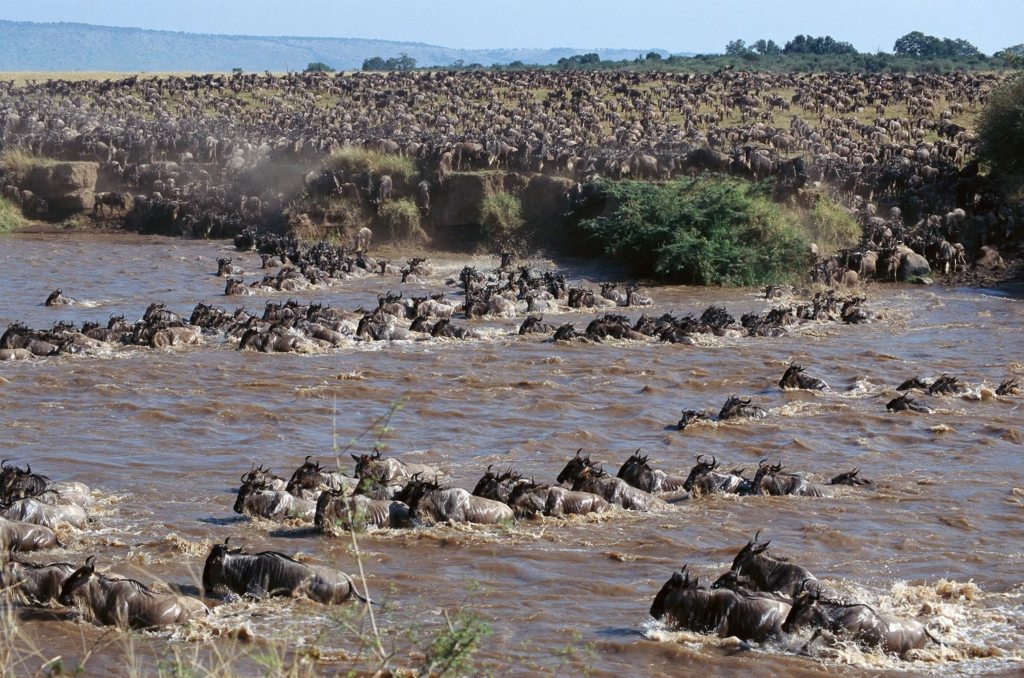
Wildebeests also display incredible determination during river crossings. Despite strong currents and lurking crocodiles, they continue crossing rivers because reaching better grazing land is vital for survival. Their instinct to follow one another allows massive herds to move together through some of the migration’s most dangerous stages.
These animals also play an important ecological role. Their grazing encourages fresh plant growth, while their waste naturally fertilises the soil. As they travel, they spread nutrients across the Serengeti and support countless other forms of wildlife.
Without wildebeests, the Great Migration would not exist in its current form. Their leadership drives one of the world’s greatest wildlife spectacles and sustains the remarkable biodiversity of the Serengeti ecosystem.
Zebras Travel Alongside the Wildebeests
Zebras are the second largest group participating in the Great Migration. More than 200,000 zebras travel alongside the wildebeests each year, creating one of the most recognisable wildlife scenes in Africa. Although they often receive less attention than the wildebeests, zebras play an equally valuable role throughout the migration.
Unlike wildebeests, zebras prefer eating taller, tougher grasses. As they graze, they remove the upper layers of vegetation, making it easier for wildebeests to feed on the shorter, nutrient rich grass beneath. This natural partnership benefits both species and allows them to travel together without competing directly for food.
Zebras also contribute to the safety of the migrating herds. Their excellent eyesight and hearing help detect approaching predators long before danger reaches the larger group. When zebras become alert, wildebeests quickly respond, giving the entire herd a better chance of escaping attacks.
The striking black and white stripes of zebras also create a fascinating visual effect. Scientists believe these patterns may confuse predators when large herds move together, making it more difficult to focus on individual animals during an attack.
Like wildebeests, zebras face many challenges throughout the migration. River crossings expose them to crocodiles, while lions, hyenas, and leopards constantly search for hunting opportunities. Despite these dangers, zebras continue the journey each year because following fresh grazing remains essential for survival.
Visitors watching the Great Migration quickly realise that zebras contribute much more than beauty to the Serengeti. Their cooperation with wildebeests demonstrates how different species can thrive together while supporting one another throughout one of nature’s most extraordinary journeys.
Gazelles Join the Migration Journey
Thomson’s gazelles complete the trio of primary migrating animals within the Serengeti ecosystem. Although they travel in smaller numbers than wildebeests and zebras, hundreds of thousands of gazelles participate in the migration each year. Their speed, agility, and alert behaviour add another fascinating dimension to this remarkable wildlife event.
Gazelles have different feeding habits from both wildebeests and zebras. They prefer young shoots, herbs, and highly nutritious plants that grow after the larger animals have grazed. This difference allows all three species to share the same grazing areas while making efficient use of available vegetation.
One of the gazelle’s greatest strengths is its speed. Thomson’s gazelles can run at impressive speeds when escaping predators, often changing direction rapidly to avoid capture. Watching these graceful animals race across the Serengeti plains becomes one of the most exciting moments during many safari game drives.
Predators frequently target gazelles because of their smaller size. Cheetahs, in particular, specialise in hunting gazelles across the open plains. These dramatic chases showcase the incredible athletic ability of both predator and prey while demonstrating the delicate balance that defines the Serengeti ecosystem.
Gazelles also contribute to the migration’s ecological importance. By feeding on different vegetation from the other migrating animals, they help maintain healthy grasslands while supporting biodiversity throughout the region.
Although many visitors initially focus only on the massive wildebeest herds, gazelles provide equally rewarding wildlife viewing opportunities. Their graceful movements, remarkable speed, and constant awareness enrich every stage of the Great Migration.
Why These Animals Migrate Together
One of the most fascinating aspects of the Great Migration is the close relationship between wildebeests, zebras, and gazelles. These three species migrate together because their different feeding habits, natural abilities, and survival strategies complement one another remarkably well. Their cooperation allows them to benefit from travelling as one enormous community.
Each species eats different types of vegetation. Zebras graze on longer grasses, wildebeests feed on shorter nutrient rich grass, and gazelles consume fresh herbs and young plants. Because they rarely compete directly for the same food, they can travel together while making efficient use of available grazing land.
Safety also improves when animals migrate in large mixed herds. More eyes, ears, and noses help detect approaching predators earlier. Zebras often notice danger first because of their excellent eyesight, while wildebeests rely heavily on the reactions of surrounding animals. Gazelles contribute with their alert behaviour and rapid movements.
Travelling in massive numbers also reduces individual risk. Predators may successfully catch some animals, but the majority of the herd continues moving safely across the Serengeti. This survival strategy has allowed the Great Migration to continue successfully for thousands of years.
Rainfall remains the main force driving the migration. As fresh grass grows in different areas, all three species naturally follow these grazing opportunities while maintaining their remarkable partnership throughout the journey.
Understanding why these animals migrate together helps visitors appreciate the complexity of the Serengeti ecosystem. The Great Migration is not simply a movement of wildlife. It is an extraordinary example of cooperation, adaptation, and survival that continues to inspire travellers from around the world.
Predators That Follow the Migration
The Great Migration is not only about herbivores travelling across the Serengeti. It also supports an incredible population of predators that depend on the migrating animals for food. As wildebeests, zebras, and gazelles move across the plains, many predators follow closely behind, creating one of the most exciting wildlife experiences in Africa.
Lions are among the most common predators seen during the migration. Several prides establish territories along migration routes because they know thousands of prey animals will eventually pass through. Visitors often watch lions resting under trees before suddenly becoming active when herds approach. Their teamwork and hunting skills make every game drive unpredictable and exciting.
Cheetahs also benefit from the migration, especially across the open grasslands of southern and central Serengeti. Their incredible speed allows them to chase gazelles and young wildebeests over short distances. Watching a cheetah sprint across the plains is one of the most thrilling moments visitors can experience during a safari.
Leopards prefer wooded areas where they hunt alone. Although they are more difficult to spot, experienced guides often locate them resting in trees after successful hunts. Hyenas are equally important because they hunt efficiently and also clean the ecosystem by feeding on animal remains.
The Mara and Grumeti Rivers introduce another famous predator. Large Nile crocodiles wait patiently for migrating animals to enter the water during river crossings. These powerful reptiles remain almost invisible before launching sudden attacks, creating dramatic scenes that highlight the harsh realities of nature.
The presence of predators keeps the Serengeti ecosystem healthy by maintaining balanced wildlife populations. Every hunt demonstrates the natural relationship between predator and prey, reminding visitors that every animal plays an important role in this remarkable environment.
Birds and Other Wildlife During the Migration
Although the Great Migration focuses mainly on wildebeests, zebras, and gazelles, many other animals benefit from this extraordinary event. The migration creates opportunities for birds, reptiles, insects, and numerous mammals that thrive alongside the moving herds. As a result, visitors enjoy far more than simply watching migrating animals.
Birdlife becomes especially impressive throughout the migration. Large birds such as vultures, eagles, and marabou storks often circle above the plains, searching for feeding opportunities after predator hunts. Their presence quickly signals that wildlife activity is taking place nearby, making them valuable indicators for safari guides.
Smaller bird species also flourish across the Serengeti. Secretary birds stride confidently through the grasslands hunting snakes and insects, while crowned cranes add colour to wetlands and open plains. During certain seasons, migratory birds arrive from Europe and Asia, increasing the already impressive diversity of species found in Tanzania.
Elephants, giraffes, buffaloes, hippos, warthogs, and numerous antelope species continue living within the Serengeti year round. Although they do not participate in the Great Migration itself, visitors regularly encounter them during game drives. Their presence creates a complete safari experience that extends well beyond the migrating herds.
Smaller wildlife also contributes to the ecosystem. Insects help pollinate plants, dung beetles recycle animal waste, and reptiles thrive within different habitats across the national park. Every species supports the delicate balance that allows the Serengeti ecosystem to function naturally.
For visitors, this rich biodiversity means every safari offers something different. Even when the migration moves into another region, countless wildlife encounters continue throughout the Serengeti, making every game drive rewarding.
Best Places to See Migrating Animals in Serengeti
Choosing the right location greatly improves the chances of witnessing the Great Migration. Because the herds move continuously throughout the year, different parts of the Serengeti offer the best wildlife viewing during different seasons. Understanding these locations helps travellers plan a more successful safari.
The southern Serengeti and Ndutu area become the ideal destination between January and March. During this period, visitors witness the famous calving season as hundreds of thousands of wildebeest calves are born across the open plains. Predators also gather in large numbers, creating outstanding wildlife viewing opportunities.
Central Serengeti remains an excellent safari destination throughout much of the year. Large herds frequently pass through this region while resident wildlife stays abundant. Lions, elephants, giraffes, buffaloes, leopards, and cheetahs provide exciting sightings regardless of the migration stage.
Between May and June, western Serengeti becomes increasingly important as the herds approach the Grumeti River. Visitors enjoy impressive wildlife concentrations while observing one of the migration’s important crossing points. Although these crossings receive less publicity than the Mara River, they remain spectacular to witness.
Northern Serengeti becomes the highlight from July through October. During these months, the famous Mara River crossings attract visitors from around the world. Massive herds gather before crossing dangerous waters filled with crocodiles, creating unforgettable wildlife moments.
Since rainfall influences the exact movement of the herds, flexible planning remains essential. Giant Holiday Safaris continuously monitors migration patterns and recommends the most suitable safari locations according to current wildlife movements. This expert guidance significantly improves the chances of witnessing the migration at its most exciting stage.
Why Choose Giant Holiday Safaris for a Serengeti Migration Safari
A successful Great Migration safari depends on careful planning, expert local knowledge, and choosing the right destinations at the right time. Since the migration changes slightly every year according to rainfall, travellers benefit from working with experienced safari professionals who understand these seasonal movements. Giant Holiday Safaris offers that expertise while creating personalised safari experiences for every visitor.
Every itinerary is designed around current migration conditions rather than relying only on historical calendars. This approach allows travellers to spend more time enjoying wildlife and less time searching for the herds. Whether visitors dream of witnessing the calving season, photographing river crossings, or observing predators in action, each safari is carefully tailored to meet those goals.
Accommodation also plays a major role in the overall safari experience. Giant Holiday Safaris selects comfortable lodges and tented camps located close to seasonal migration routes. Travellers can choose from luxury lodges, mid range accommodation, or budget friendly camps without compromising excellent wildlife viewing opportunities.
Professional safari guides bring each journey to life through their extensive knowledge of animal behaviour, conservation, birdlife, and local ecosystems. They understand where wildlife is most active while ensuring responsible and respectful game viewing. Their experience often transforms ordinary sightings into unforgettable learning experiences.
Before departure, travellers also receive useful guidance on packing, weather conditions, travel requirements, and safari preparation. This support allows visitors to arrive fully prepared for every stage of their adventure.
By combining personalised service, experienced guides, excellent accommodation, and deep knowledge of the Serengeti ecosystem, Giant Holiday Safaris helps visitors experience one of Africa’s greatest wildlife spectacles with confidence and comfort.
What Animals Migrate in Serengeti and How to Spot them
Understanding what animals migrate in Serengeti helps travellers appreciate the true scale and importance of the Great Migration. While wildebeests lead this extraordinary journey, zebras and Thomson’s gazelles also play essential roles as they travel together across the Serengeti ecosystem in search of fresh grazing and water. Their remarkable partnership creates one of the largest and most impressive wildlife migrations anywhere in the world.
The migration also supports countless other animals. Predators such as lions, cheetahs, leopards, hyenas, and crocodiles rely on the moving herds for survival, while birds and many other wildlife species benefit from the rich ecosystem that the migration sustains. Every animal contributes to the natural balance that makes the Serengeti one of Africa’s greatest conservation success stories.
Visitors who plan their safari carefully can enjoy different migration highlights throughout the year. From the calving season in the southern Serengeti to the famous Mara River crossings in the north, every stage offers unforgettable wildlife encounters and extraordinary photographic opportunities.
Planning with Giant Holiday Safaris ensures travellers visit the right locations at the right time while benefiting from expert local knowledge, experienced guides, and carefully designed itineraries. This personalised approach maximises wildlife viewing and creates memorable safari experiences for visitors of every age.
Ultimately, what animals migrate in Serengeti has an inspiring answer. Millions of wildebeests, zebras, and gazelles travel together in an incredible journey that supports an entire ecosystem and showcases the breathtaking beauty of Tanzania’s natural heritage. Witnessing this extraordinary migration remains one of the greatest wildlife experiences on Earth.