
What are the best safari memories to expect in Kenya?
August 19, 2026
Can you visit local communities during safari?
August 19, 2026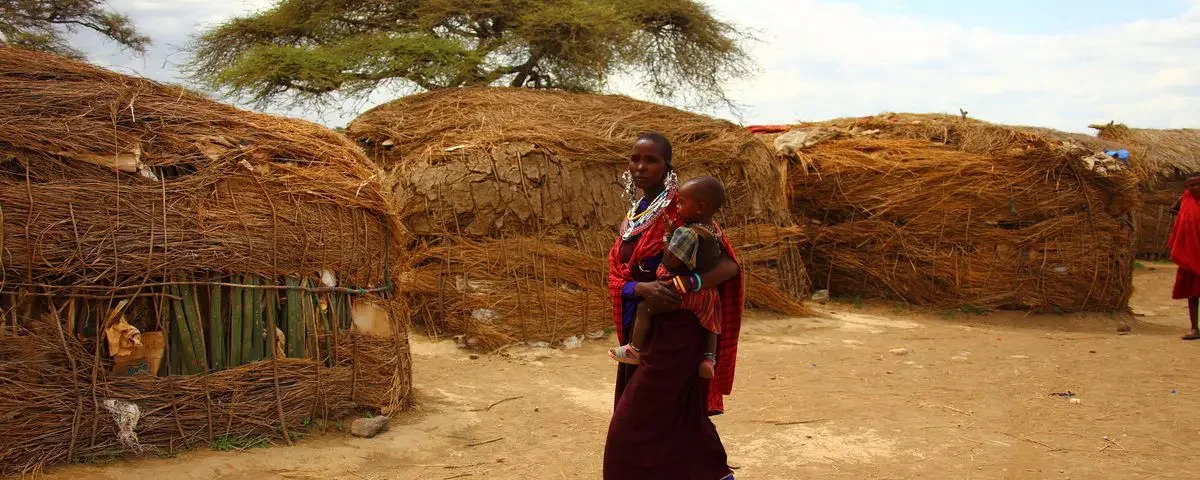
Are Maasai Village Visits Ethical?
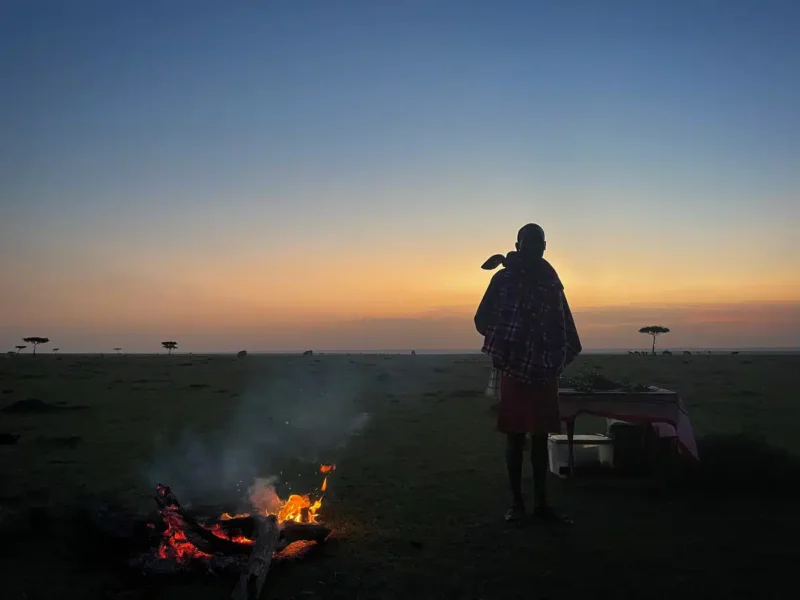
Visiting a Maasai village can become one of the most memorable experiences on an African safari. Travelers get the chance to learn about traditional homes, family life, livestock keeping, beadwork, ceremonies, food, and the strong connection between the Maasai people and the land. However, a meaningful cultural experience requires more than simply entering a village, taking photographs, and leaving with souvenirs. Travelers must also consider how tourism affects the people they meet and whether their visit creates genuine value for the community.
The question “Are Maasai village visits ethical?” therefore deserves a thoughtful answer. Yes, a Maasai village visit can be ethical when tourism respects local people, supports their choices, protects their dignity, and provides fair economic benefits. However, not every cultural visit follows these principles. Some experiences may reduce culture to entertainment, pressure visitors to buy products, encourage intrusive photography, or provide limited benefits to the wider community.
Responsible travelers should look beyond the activity itself. They should understand who owns or manages the village experience, how money reaches local households, whether residents participate in decisions, and how visitors should behave. Furthermore, travelers should recognize that the Maasai are living communities rather than museum exhibits. Their culture continues to change, adapt, and develop alongside modern education, technology, business, conservation, and tourism.
An ethical visit creates an opportunity for genuine cultural exchange. It allows travelers to learn while giving local communities control over how they present their traditions. When managed responsibly, cultural tourism can strengthen local livelihoods, support education, encourage conservation, and create greater appreciation for Maasai heritage. When managed poorly, however, it can create exploitation and reinforce inaccurate ideas about Maasai life.
Understanding this difference helps travelers make better choices. It also encourages safari operators, guides, communities, and visitors to build tourism experiences around respect, transparency, participation, and long-term community benefit.
Combined Uganda, Kenya, Rwanda and Tanzania Safaris
17 days Kenya Tanzania and Uganda safari
19 Days Uganda Kenya and Tanzania Safari
16 Days Kenya Tanzania and Uganda Safari
14 Days Kenya Uganda and Tanzania Safari
14 Days Kenya Uganda and Rwanda Safari
12 Day Gorilla Trekking and Tanzania Safari
Understanding Maasai Culture Before Visiting
A responsible Maasai village visit begins with understanding that Maasai culture is much broader than the colorful clothing, traditional dances, beadwork, and cattle often shown in tourism advertisements. The Maasai are diverse communities with their own histories, family structures, economic activities, social practices, beliefs, and relationships with the environment. Their lives also vary depending on location, household circumstances, education, access to markets, conservation areas, and changing economic conditions.
The Maasai live mainly across parts of Kenya and Tanzania, including areas close to some of East Africa’s most famous safari destinations. This geographical connection has created strong links between Maasai communities, wildlife conservation, pastoralism, and tourism. In several areas, tourism provides opportunities for employment, cultural enterprises, guiding, handicraft sales, conservation partnerships, and community projects.
However, travelers should avoid viewing Maasai people through a frozen image of the past. Modern Maasai communities use mobile phones, attend schools, operate businesses, work in tourism, engage with conservation programs, and participate in wider national economies. Traditional practices may continue alongside modern lifestyles.
Therefore, visitors should approach a village experience with curiosity rather than assumptions. Ask yourself what you can learn rather than what you expect the community to perform for you. A good cultural experience allows people to explain their lives in their own way.
This approach also improves the quality of the visit. Instead of simply watching a staged activity, you can understand why certain traditions matter, how livelihoods work, and how communities balance heritage with modern opportunities. Cultural tourism becomes more meaningful when travelers see people as individuals and communities with agency, rather than as attractions.
When Can a Maasai Village Visit Be Ethical?
A Maasai village visit becomes ethical when the community has meaningful control over the experience and receives fair value from tourism. Community participation stands at the center of responsible cultural tourism. Local people should have a genuine role in deciding whether visitors enter, what activities take place, how guests interact with residents, and how tourism income gets used.
Transparency also matters. Travelers should know what their visit supports. A reputable tourism experience should provide clear information about entrance fees, community contributions, purchases, employment, and other forms of local benefit. While visitors may not receive a complete financial breakdown, the operator should demonstrate a clear commitment to community welfare.
Consent provides another important foundation. Residents should not feel forced to participate in photographs, demonstrations, conversations, dances, or other activities simply because tourists have arrived. People should have the freedom to decline interaction.
Fair payment matters as well. Local guides, performers, artisans, drivers, cooks, and other workers deserve appropriate compensation for their time and skills. Tourism should not create a situation where outsiders receive most of the financial benefit while local participants carry the cultural and social burden.
Ethical tourism also protects dignity. A visitor should never treat a Maasai household, person, child, ceremony, or religious practice as a spectacle. Respectful visitors follow local rules, ask before taking photographs, avoid inappropriate touching, and listen when guides explain cultural boundaries.
Finally, ethical tourism should create long-term value. A good visit should contribute to sustainable livelihoods rather than encourage dependency on short-term tourist spending. When tourism supports education, conservation, healthcare, women-led enterprises, youth opportunities, or community development, it can become part of a wider system of positive local impact.
The Importance of Community Ownership and Participation
Community ownership can make a major difference in the ethics of a cultural tourism experience. When local communities participate directly in tourism management, they gain greater influence over how their culture appears to visitors and how tourism affects their daily lives.
Ownership does not always mean that every village operates an independent tourism company. Different communities use different models. Some manage cultural experiences directly, while others work with conservation organizations, private tourism companies, lodges, community conservancies, or local associations. What matters most is whether the community has a meaningful voice and receives a fair share of the benefits.
Participation should also extend beyond receiving payments. Communities can help design visitor rules, determine acceptable activities, establish photography policies, select local guides, manage cultural presentations, and decide how tourism revenue supports community priorities.
This approach strengthens accountability. If local people control important parts of the experience, tourism operators have a stronger reason to respect community expectations. Visitors also gain a more authentic experience because local knowledge guides the interaction.
Furthermore, community participation can help protect cultural heritage. Tourism creates demand for cultural knowledge, traditional crafts, storytelling, music, and other forms of heritage. When communities control how these elements enter tourism, they can decide which traditions they want to share and which practices should remain private.
Travelers should therefore ask simple questions before booking. Who organizes the visit? Who guides the experience? Where does the entrance fee go? Do local residents benefit directly? Does the community have a say in tourism activities?
These questions do not make a traveler difficult. Instead, they show respect. Responsible tourism begins when visitors recognize that the community should remain an active partner rather than simply becoming the subject of a tourism product.
Is Taking Photos in a Maasai Village Ethical?
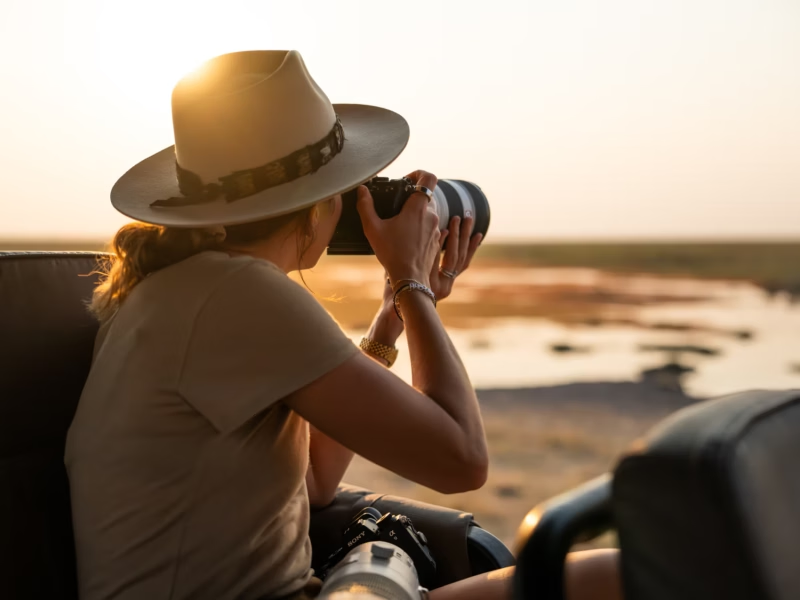
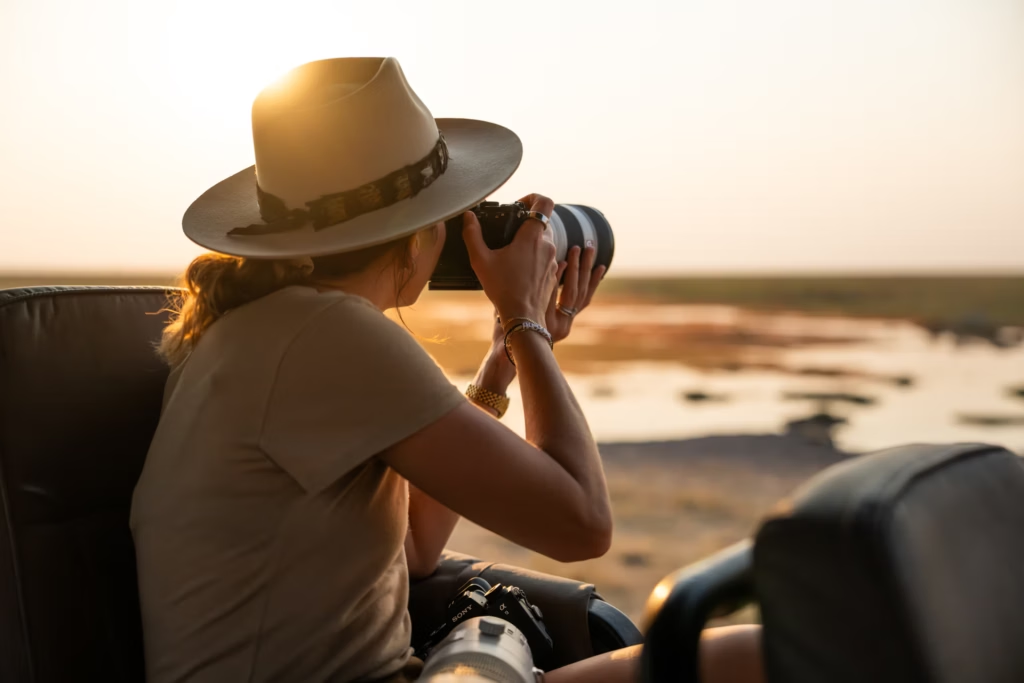
Photography can create wonderful memories, but it can also become one of the most sensitive parts of a Maasai village visit. A camera gives travelers the ability to capture moments instantly, yet the presence of a camera does not automatically create permission.
The simplest rule is clear: ask before taking photographs of people. This matters especially when photographing children, elders, private family spaces, religious activities, ceremonies, or individuals who may not understand how their image will appear online.
Travelers should also respect a refusal. If someone does not want a photograph, accept the answer without pressure. Do not keep pointing the camera, follow the person, or offer money simply to persuade them.
Photographs can also affect dignity when travelers focus heavily on stereotypical images. A visitor who photographs only traditional clothing, dancing, or physical appearance may leave with a narrow understanding of Maasai life. A better approach involves learning first and photographing thoughtfully.
The same principle applies to social media. Before posting photographs online, think about how the image represents the person and community. A photograph may seem harmless to a visitor while creating an entirely different impression when viewed by people from another culture.
Children deserve particular care. Even when a guide permits photography, travelers should avoid treating children as photo opportunities. Respect privacy and follow the rules established by the community.
Ethical photography ultimately depends on consent, context, and respect. A good photograph should preserve a meaningful memory without taking away someone’s dignity. Travelers who follow these principles can enjoy photography while helping create a healthier relationship between cultural tourism and local communities.
Should You Buy Maasai Beadwork and Handicrafts?
Buying locally made handicrafts can become an important part of responsible tourism. Maasai beadwork, jewelry, clothing, carvings, and other crafts provide income for artisans and can help preserve valuable skills. However, travelers should consider how and where they purchase these products.
Direct purchases from local artisans or genuine community enterprises can provide stronger benefits than buying mass produced products from intermediaries. Visitors should look for clear information about who made the item and whether the purchase supports the person or group responsible for its production.
Price negotiation also requires sensitivity. Bargaining forms part of shopping culture in some tourism settings, but pushing an artisan to accept an extremely low price can undermine the value of their work. The time, materials, skill, creativity, and cultural knowledge behind a handmade product all have value.
Travelers should also avoid buying items that communities consider inappropriate for sale or that involve protected wildlife products. Responsible tourism requires respect for conservation laws as well as cultural rules.
When buying beadwork, travelers can also take the opportunity to learn about its design. Colors, patterns, materials, and styles can carry cultural meaning, although meanings can vary between communities and individuals. Instead of assuming that every item has the same symbolism, ask the artisan or guide to explain it.
A purchase becomes more meaningful when it supports the person who created it and helps sustain a local enterprise. Moreover, travelers can continue supporting artisans after the safari by recommending their work, sharing their businesses responsibly, and choosing authentic products rather than cheap imported imitations.
In this way, shopping becomes more than collecting souvenirs. It becomes a practical way to connect tourism spending with local creativity and livelihoods.
Can Maasai Cultural Tourism Support Local Communities?
Yes, cultural tourism can provide meaningful economic opportunities when communities receive a fair share of tourism revenue. Tourism can create employment for guides, performers, drivers, artisans, cooks, conservation workers, and hospitality staff. It can also create markets for locally produced crafts and services.
The benefits can extend beyond individual workers. In well managed tourism areas, community revenue may support schools, water projects, health services, conservation activities, infrastructure, training, or other locally identified priorities.
However, tourism revenue does not automatically benefit everyone. The structure of the tourism arrangement matters. If most income leaves the community through outside businesses, the cultural experience may generate limited local value despite attracting large numbers of visitors.
This makes transparency and community participation essential. Responsible tourism operators should work with communities rather than simply using cultural attractions to increase the value of a safari package.
Tourists also have a role. Choosing locally guided experiences, buying authentic products, paying fair prices, and respecting community rules can strengthen the positive economic impact of a visit.
At the same time, travelers should avoid assuming that money alone solves every problem. Communities have different priorities, and tourism should complement rather than replace other livelihoods. Maasai pastoralism, education, agriculture, entrepreneurship, conservation, and employment can all form part of a diverse local economy.
The strongest cultural tourism models therefore focus on resilience. They help communities create several opportunities instead of depending entirely on tourist arrivals. This becomes especially important when travel patterns change because of economic conditions, health emergencies, climate events, or other disruptions.
Ethical tourism should leave communities with greater choices, stronger skills, and sustainable opportunities.
The Role of Responsible Safari Operators
Safari operators play a major role in determining whether a Maasai village visit becomes respectful or exploitative. Travelers often depend on their operator to arrange transportation, guides, cultural activities, and payments. Therefore, operators carry an important responsibility to select community partners carefully.
A responsible operator should understand the local context and establish clear expectations before bringing guests into a community. Guides should explain appropriate behavior, photography rules, dress expectations, and cultural boundaries before the visit begins.
Operators should also avoid promising an experience based on stereotypes. Marketing should present Maasai communities accurately and respectfully rather than portraying them as untouched, primitive, or frozen in history. Such descriptions can create false expectations and reduce complex communities to simple tourism images.
Good operators also build long-term relationships. They do not treat cultural visits as interchangeable stops on an itinerary. Instead, they work with community partners over time, listen to concerns, review visitor feedback, and adjust practices when necessary.
Guide training also matters. A knowledgeable guide can help travelers understand cultural practices without turning every tradition into entertainment. Guides can explain the difference between public cultural activities and private traditions, helping visitors understand where respectful observation ends and intrusion begins.
Furthermore, responsible operators should evaluate the financial structure of their cultural partnerships. They should know who receives payments and whether the agreed community benefits actually reach the intended recipients.
For travelers, this means choosing a safari company carefully. Do not judge an operator only by vehicle quality, accommodation, or price. Look at its approach to communities, conservation, local employment, and responsible tourism.
The quality of a safari includes the quality of relationships behind it.
What Travelers Should Avoid During a Maasai Village Visit
Respectful behavior begins before arriving at the village. Travelers should learn basic cultural expectations and understand that they enter someone’s community, not a theme park. A little preparation can prevent uncomfortable situations and protect local dignity.
Avoid photographing people without permission. Also avoid entering homes, touching personal belongings, or joining ceremonies unless residents or guides clearly invite you to participate.
Do not make jokes about clothing, physical appearance, marriage, family structures, religion, or traditional practices. Travelers may find unfamiliar customs interesting, but curiosity should never become disrespect.
Avoid treating children as entertainment. Giving money, sweets, pens, or other items directly to children can also create unwanted behavior and unequal relationships. If the community has an established donation program, use the appropriate channel instead.
Travelers should also avoid demanding performances. A cultural demonstration should happen because the community has chosen to offer it, not because visitors expect entertainment whenever they arrive.
Do not assume every Maasai person follows exactly the same traditions. Communities and individuals differ. Ask respectful questions and allow local people to explain their own experiences.
Finally, avoid turning the visit into a race. Spending more time listening and learning often creates a better experience than rushing through several activities. Cultural tourism works best when visitors slow down.
The goal should not be to collect the largest number of photographs or experiences. Instead, the goal should be to leave with a deeper understanding while ensuring that the people who welcomed you feel respected.
How to Choose an Ethical Maasai Village Experience
Choosing a responsible experience requires some research before booking. Travelers should examine how the cultural visit fits into the wider safari itinerary and whether the operator provides clear information about the community partnership.
Look for experiences that emphasize cultural learning rather than staged entertainment. A strong itinerary may include conversations with local guides, demonstrations of traditional crafts, explanations of pastoral life, visits to community projects, and opportunities to learn about conservation.
Ask whether local people guide the experience. Local guides can provide knowledge that extends beyond basic tourism information. They can explain community history, landscapes, livelihoods, and cultural practices from a closer perspective.
Also consider the scale of the visit. Smaller groups often make cultural interaction easier and more comfortable. Large groups can create noise, crowding, and pressure, particularly when several vehicles arrive at the same time.
The timing of the visit matters too. Communities have daily responsibilities. Livestock management, schooling, household work, ceremonies, and other activities continue regardless of tourist schedules. Responsible tourism should accommodate community life rather than expecting residents to organize their entire day around visitors.
Review the operator’s approach to community benefits as well. A trustworthy company should explain how it works with local communities and should not make vague promises about “giving back” without showing how its partnerships operate.
Finally, consider whether the experience encourages learning. The best cultural visits leave travelers with a deeper appreciation for Maasai heritage and modern community life.
A thoughtful booking decision can therefore improve both the visitor experience and the local impact of tourism.
Can Cultural Tourism Preserve Maasai Heritage?
Cultural tourism can contribute to heritage preservation, but only when communities control what they share and how they share it. Tourism creates an economic reason to maintain certain skills, crafts, stories, music, and cultural knowledge. Yet tourism should never force communities to perform traditions simply because tourists want to see them.
Heritage remains strongest when younger generations see value in their culture while also having freedom to pursue education, employment, technology, and other modern opportunities. Tourism can support that balance by creating markets for cultural products and opportunities for local people to work as guides, artisans, performers, educators, or entrepreneurs.
However, visitors should understand that culture naturally changes. A culture does not become less authentic because people use smartphones, attend universities, operate businesses, or live in modern homes. Authenticity does not require people to remain in the past.
This understanding helps prevent one of the biggest problems in cultural tourism: the demand for “traditional authenticity” that exists mainly for visitors. When tourists expect people to dress, behave, or live in a particular way solely to satisfy tourism expectations, the industry can distort cultural identity.
Ethical cultural tourism takes the opposite approach. It allows communities to decide which elements of heritage they want to share and recognizes their right to change.
Travelers can support this process by purchasing genuine crafts, listening to local stories, learning about community history, and respecting modern Maasai life as much as traditional practices.
Heritage survives best when communities own it. Tourism can support that process, but it should never control it.
The Connection Between Maasai Communities and Conservation
Maasai communities have long-standing relationships with the landscapes that surround many famous wildlife destinations in Kenya and Tanzania. This connection makes community-based conservation an important part of responsible tourism in East Africa.
Wildlife does not exist separately from people. Many safari landscapes include community lands, grazing areas, conservancies, wildlife corridors, and settlements. Therefore, successful conservation often depends on relationships between communities, tourism businesses, governments, conservation organizations, and visitors.
Tourism can create incentives for protecting wildlife and natural habitats when communities receive meaningful benefits from conservation-related activities. Employment, tourism revenue, education programs, infrastructure, and enterprise opportunities can strengthen the value communities receive from maintaining healthy ecosystems.
At the same time, travelers should understand that conservation can create difficult questions around land use, grazing, development, wildlife, and community rights. A responsible safari should not present conservation as a simple story where wildlife always matters more than people.
Ethical tourism recognizes both sides. It supports wildlife protection while respecting communities that live within and around conservation landscapes.
Visitors can contribute by choosing operators that work responsibly with community conservancies and by following park and community rules. They should also avoid littering, disturbing wildlife, wasting water, or creating unnecessary pressure on fragile environments.
The connection between cultural tourism and conservation becomes especially powerful when communities see direct value in protecting the land. When tourism creates respectful partnerships, cultural experiences can become part of a wider conservation economy.
This relationship requires patience, transparency, and long-term commitment. Sustainable tourism does not simply visit a landscape. It helps protect the relationships that allow people, wildlife, and ecosystems to coexist.
Why Ethical Maasai Village Visits Matter to Global Travelers
For international travelers, a Maasai village visit can offer something that a standard wildlife drive cannot provide: direct cultural learning. A safari may show visitors elephants, lions, giraffes, rhinos, and vast landscapes, but cultural experiences reveal the human stories connected to those landscapes.
This matters because Africa contains diverse cultures and societies that deserve to be understood beyond common tourism images. A traveler who takes time to learn about local communities develops a broader understanding of the destination.
Ethical cultural tourism also creates opportunities for meaningful human connection. Visitors can learn about livelihoods, family life, environmental knowledge, traditional crafts, food, education, entrepreneurship, and changing social conditions.
However, meaningful connection requires humility. Travelers arrive with their own cultural assumptions, and those assumptions may not always match local realities. Instead of expecting communities to confirm what they already believe, visitors should remain open to learning something new.
Responsible tourism also encourages better global relationships. When people travel respectfully, they can return home with more balanced views of Africa and its people. They can understand that African communities are not defined only by wildlife, poverty, traditional clothing, or rural life.
For this reason, ethical village visits can contribute to a wider form of tourism education. They help travelers understand Africa as a continent of diverse people, economies, histories, cultures, innovations, and landscapes.
A good cultural experience should therefore change the way a visitor sees the destination. It should create knowledge rather than stereotypes, respect rather than curiosity without boundaries, and connection rather than consumption.
Practical Questions to Ask Before Booking
Travelers can make better decisions by asking a few direct questions before confirming a Maasai village visit. These questions help reveal whether the experience prioritizes community participation and responsible tourism.
First, ask who owns or manages the cultural experience. Next, ask whether local residents guide the visit and how tourism revenue benefits the community.
It also helps to ask how the operator handles photography. A clear policy shows that the company takes personal dignity seriously.
Ask whether the experience involves a community enterprise, conservation initiative, local craft cooperative, or other long-term partnership. This information can help you understand whether the visit forms part of a wider community program.
Travelers can also ask how large the visitor groups normally become. Smaller groups often create better conditions for conversation and reduce disruption.
Another useful question concerns purchasing crafts. Find out whether artisans sell products directly and whether the operator supports authentic local businesses.
Do not hesitate to ask about community benefits. Responsible operators should welcome reasonable questions because transparency strengthens trust.
Finally, ask what visitors should know before arrival. A good guide or operator should prepare guests for cultural expectations instead of leaving them to discover boundaries through mistakes.
These questions take only a few minutes, yet they can significantly improve the quality of a cultural tourism experience. More importantly, they encourage tourism businesses to maintain higher standards.
Responsible travel begins with informed choices. Every booking sends a message about the type of tourism travelers want to support.
Conclusion: Choosing Cultural Tourism With Respect
A Maasai village visit can be ethical, educational, and deeply rewarding when tourism puts people, dignity, consent, community participation, and fair economic benefit at the center of the experience. The key issue does not simply involve whether travelers visit a village. Instead, it involves how the visit happens, who controls it, who benefits from it, and how visitors behave while they are there.
Responsible travelers should ask questions, respect photography rules, support authentic local enterprises, avoid stereotypes, listen carefully, and understand that Maasai communities continue to evolve. They should also recognize that culture belongs to the people who live it. Tourism can create opportunities to share that culture, but visitors should never expect communities to remain unchanged for the sake of entertainment.
For safari operators, ethical cultural tourism requires long-term relationships, transparent partnerships, fair local employment, responsible marketing, and genuine respect for community decisions. These principles strengthen not only the visitor experience but also the wider future of African tourism.
For travelers planning a Kenya or Tanzania safari, choosing a responsible cultural experience can turn a simple village visit into a meaningful exchange. It can support local livelihoods, strengthen cultural pride, encourage conservation, and create a deeper connection between visitors and the destinations they explore.
Giant Holiday Safaris approaches African travel with the understanding that a memorable safari should respect the people, wildlife, landscapes, and cultures that make the continent extraordinary. By choosing experiences built around responsible partnerships and meaningful cultural interaction, travelers can explore Africa with confidence while helping tourism create lasting value for local communities.