How early should I arrive before safari departure?
August 19, 2026
What are the best Maasai cultural tours in Kenya?
August 19, 2026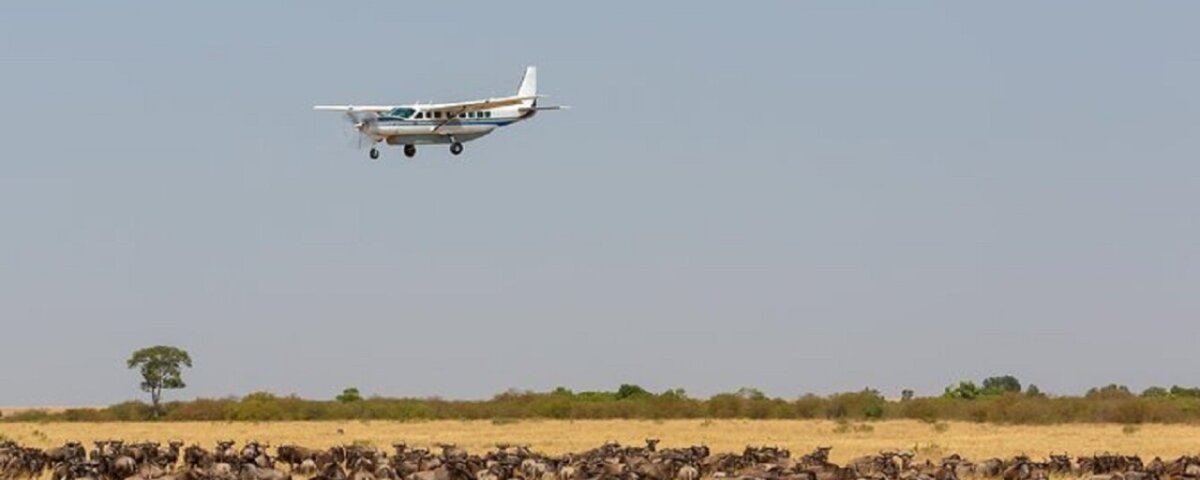
What Is the Luggage Limit for Fly-In Safaris?
A fly-in safari offers one of the most exciting ways to explore Africa. Instead of spending long hours on rough roads between wildlife destinations, travelers can board a small aircraft and fly directly toward a national park, conservancy, or remote safari camp. The journey saves time, reduces road travel, and often provides spectacular views of Africa’s landscapes from above. However, fly-in safaris require a different approach to packing because small safari aircraft operate under strict weight and space limits.
For most travelers, the luggage allowance on a fly-in safari ranges between 15 kg and 20 kg per person, including hand luggage and personal items. However, there is no single luggage limit for every African safari flight. The exact allowance depends on the airline, aircraft, route, destination, and operating conditions. For example, Coastal Aviation in Tanzania currently allows up to 15 kg per passenger, including carry-on luggage, while Auric Air lists a 20 kg total allowance that also includes hand baggage, cameras, and other personal items.
Therefore, travelers should never assume that the baggage allowance on their international flight also applies to their safari flight. A large international suitcase may meet the requirements of a long-haul carrier but still create a problem on a small bush aircraft.
The best approach involves packing light, choosing flexible luggage, and confirming the allowance before departure. With the right preparation, luggage restrictions become simple to manage rather than a source of stress.
Combined Uganda, Kenya, Rwanda and Tanzania Safaris
17 days Kenya Tanzania and Uganda safari
19 Days Uganda Kenya and Tanzania Safari
16 Days Kenya Tanzania and Uganda Safari
14 Days Kenya Uganda and Tanzania Safari
14 Days Kenya Uganda and Rwanda Safari
12 Day Gorilla Trekking and Tanzania Safari
Why Fly-In Safaris Have Strict Luggage Limits
Fly-in safari aircraft operate very differently from large international passenger planes. Many safari routes use small aircraft designed to land on short bush airstrips close to wildlife areas and remote camps. These aircraft provide an important connection between major airports and destinations that large commercial aircraft cannot reach.
Weight therefore becomes an important safety factor. Every passenger, bag, piece of equipment, and item loaded onto the aircraft contributes to the aircraft’s total operating weight. The crew must also consider fuel requirements, weather, runway conditions, altitude, and the distance of the flight. Consequently, airlines cannot simply add unlimited luggage when passengers arrive with heavier bags.
The aircraft’s physical space also creates another limitation. Safari planes often have compact baggage compartments or external cargo pods. A rigid suitcase may weigh within the permitted limit but still fail to fit through the baggage compartment opening. Coastal Aviation, for example, lists a standard soft-bag size of approximately 40 × 40 × 80 cm and notes that its cargo pod door measures 76 × 48 × 29 cm.
This explains why luggage restrictions on fly-in safaris involve more than kilograms. Travelers must consider both weight and dimensions.
Most importantly, these rules protect the safety and reliability of safari flights. A responsible safari traveler should therefore treat the baggage allowance as an essential part of trip planning rather than an inconvenience.
How Many Kilograms Can You Take on a Fly-In Safari?
The most common luggage limits on African fly-in safaris fall around 15 kg to 20 kg per person. However, travelers should check the exact allowance for every airline and route because policies differ.
In Tanzania, Coastal Aviation currently sets a standard maximum of 15 kg per passenger, including carry-on luggage. The airline also states that excess baggage depends on aircraft capacity and operating conditions.
Auric Air currently provides a 20 kg total baggage allowance per passenger. Its allowance includes hand luggage, cameras, filming equipment, personal items, and loose clothing. The airline also recommends soft-sided bags because they make loading easier, although its current policy accepts different bag types within its stated size limits.
This difference shows why travelers should avoid using a general rule such as “all safari flights allow 15 kg.” The correct allowance depends on the carrier operating your specific flight.
Some airlines also provide solutions for travelers who need additional luggage. Coastal Aviation, for example, offers an XL seat option that can allow up to 30 kg when operations confirm that the aircraft can safely accommodate the additional weight.
For this reason, the safest planning method is simple: check your safari airline’s current baggage policy before packing and communicate any unusual luggage requirements early.
Does the Luggage Allowance Include Hand Luggage?
Yes, on many fly-in safari flights, the published baggage allowance includes your hand luggage. This point often surprises travelers who are used to international airlines offering a separate checked-bag allowance and cabin-bag allowance.
For example, Coastal Aviation states that its 15 kg allowance includes carry-on luggage. Auric Air also defines its 20 kg allowance as a total allowance that includes hand baggage, cameras, filming equipment, personal items, and other loose clothing.
That means a traveler should not automatically think of a 15 kg allowance as 15 kg in the main bag plus another small cabin bag. If your total permitted weight is 15 kg, everything you bring onto that safari flight may need to remain within the stated limit.
This rule makes weighing your luggage before leaving for the airport extremely useful. A small digital luggage scale can help you avoid unpleasant surprises at check-in.
You should also keep essential items organized. Important medication, travel documents, money, identification, and other critical personal items should remain easily accessible. However, these items may still contribute to the total permitted weight depending on the airline’s rules.
Because policies differ, always read the baggage conditions attached to your actual booking. A professional safari operator should also help you understand the luggage requirements before your journey begins.
Why Soft-Sided Bags Are Best for Safari Flights
A soft-sided duffel bag remains one of the smartest choices for a fly-in safari. Unlike a large hard-shell suitcase, a flexible bag can adapt to the limited storage space available on small aircraft.
Safari aircraft often use compact baggage compartments or pods. Flexible luggage makes loading and unloading easier because the bag can fit into available spaces without wasting as much room. Coastal Aviation strongly recommends soft bags for bush destinations and provides specific dimensions for luggage used on its flights.
A soft bag also makes practical sense once you arrive at a safari camp. Safari vehicles have limited storage, and porters may need to move luggage between airstrips, vehicles, boats, and lodges. A lightweight duffel with strong handles usually works better than a heavy suitcase with a rigid frame.
Choose a bag with durable zippers, strong handles, and a comfortable shape. Waterproof or water-resistant material also adds value because African safari destinations can experience sudden rain, especially during wet seasons.
Avoid overpacking with unnecessary clothing. Safari camps often provide laundry services, making it possible to reuse lightweight clothing during longer trips. Neutral-colored shirts, lightweight trousers, comfortable footwear, a light jacket, and basic personal items can cover most safari needs.
Ultimately, the best safari luggage is not the largest bag you own. It is the bag that holds your essentials while remaining light, compact, durable, and easy to handle.
What Should You Pack for a Fly-In Safari?
Packing for a fly-in safari requires careful selection. The goal is not to take everything you might possibly need. Instead, focus on versatile items that serve several purposes.
Lightweight clothing works particularly well. Pack breathable shirts, comfortable trousers, underwear, socks, sleepwear, and a light fleece or jacket for cooler mornings and evenings. Neutral colors such as beige, brown, olive, grey, and khaki can work well in safari environments, although you do not need an entire wardrobe in safari colors.
Footwear should remain practical. One comfortable pair of walking shoes or closed shoes can handle most activities. Sandals can provide an additional lightweight option for relaxing around camp.
Sun protection also deserves attention. A wide-brimmed hat, sunglasses, sunscreen, and a lightweight long-sleeved shirt can make daytime activities more comfortable. A reusable water bottle can also prove useful during travel.
Photography equipment requires special planning. Cameras, lenses, batteries, chargers, and binoculars can become surprisingly heavy. Therefore, choose your equipment carefully rather than bringing every lens you own. If you use professional filming equipment, tell your safari operator and airline before traveling because specialized equipment may have separate handling or weight requirements.
Personal medication and important travel documents should remain easy to reach. At the same time, travelers should avoid unnecessary toiletries and bulky packaging.
A well-planned safari wardrobe can fit comfortably within a 15 kg or 20 kg allowance when you prioritize lightweight, multi-purpose items.
Can You Take a Large Suitcase on a Fly-In Safari?
A large suitcase may not be the best choice for a fly-in safari, even when an airline technically accepts certain suitcase types. The issue comes down to the combination of weight, dimensions, and aircraft capacity.
Some safari airlines accept suitcases, while others strongly recommend soft-sided luggage. Auric Air’s current policy states that its flights accept different types of bags but recommends soft-sided bags because they are easier to load into aircraft pods. The airline also specifies a maximum size per piece of 90 × 65 × 35 cm.
Coastal Aviation takes a more restrictive approach for its standard bush luggage and specifies dimensions designed to fit its aircraft’s cargo space.
Therefore, travelers should not rely only on the suitcase’s weight. A bag that weighs 14 kg can still become a problem if its dimensions exceed the aircraft’s available storage space.
This becomes especially important when a safari includes several connecting flights. One airline may accept your bag while another aircraft on the same itinerary may have a smaller baggage compartment.
If you plan to travel with a hard-shell suitcase, contact your safari operator before departure. The operator can confirm whether the aircraft assigned to your route can accommodate it.
For the smoothest experience, however, a compact soft-sided duffel remains the safer and more practical option for most fly-in safari itineraries.
What Happens If Your Luggage Is Over the Weight Limit?
Arriving at a safari airstrip with excess luggage does not always mean you must abandon your belongings. However, you should never assume that an airline will carry every extra kilogram.
The airline may charge an excess baggage fee, transport the luggage separately, or refuse the additional weight when the aircraft cannot safely accommodate it. The final decision can depend on the aircraft, available space, fuel requirements, weather, and operational conditions.
Coastal Aviation states that excess luggage travels at the prevailing freight rate and remains subject to operational limitations. Its policy also notes that additional luggage may need to travel on a later flight if it cannot fit on the scheduled aircraft.
Auric Air also allows excess baggage options, including additional 10 kg slabs, while making clear that excess baggage remains subject to the captain’s discretion and available payload or space.
This is why early communication matters. If you know you will travel with heavy photography equipment, sports equipment, medical equipment, or additional luggage, inform your safari operator before the trip.
In some cases, your operator can arrange luggage storage at the beginning or end of your journey. Auric Air, for instance, provides secure luggage storage at its Dar es Salaam Terminal 1 office, subject to space availability.
Planning ahead gives you more options and reduces the risk of last-minute problems at a remote airstrip.
How to Manage Luggage on a Multi-Destination Safari
A multi-destination safari requires even more attention to luggage because you may use several aircraft and different routes during one journey. A trip that combines Nairobi, Maasai Mara, Serengeti, Ngorongoro, Zanzibar, or other destinations can involve different airlines and baggage conditions.
Do not assume that the luggage policy for the first flight automatically applies to every flight. Each airline may use a different aircraft and operate under different baggage rules.
Before your safari begins, identify every internal flight on your itinerary. Check the airline, baggage allowance, bag dimensions, and excess baggage conditions for each segment. If one flight allows 20 kg while another allows 15 kg, plan your packing around the lower limit.
This strategy makes your journey easier because you avoid repacking at every destination.
You can also separate luggage into two categories. Keep the items you need throughout the safari in your main soft-sided bag. Store unnecessary items, such as formal clothing for a beach extension or heavy shoes, at a secure location when possible.
Some safari routes and operators can help arrange luggage storage between different parts of a journey. This approach works particularly well when a traveler combines a wildlife safari with a city or beach holiday.
Ultimately, smart luggage management gives you greater freedom. You can enjoy several African destinations without carrying unnecessary weight from one airstrip to another.
Practical Tips for Staying Within the Fly-In Safari Luggage Limit
Staying within a 15 kg or 20 kg allowance becomes much easier when you pack strategically. Start by weighing your empty bag before adding anything. A lightweight duffel gives you more room for useful items than a heavy suitcase.
Next, create a simple packing list and remove anything that serves only one purpose. Choose clothing that you can combine in several ways. For example, one lightweight pair of trousers can work for game drives, travel, and evenings at camp.
Pack travel-sized toiletries instead of full-size bottles. Use lightweight sandals rather than heavy additional shoes. Consider packing quick-drying clothing because it can make laundry easier during a longer safari.
Photography equipment deserves special attention. Take the camera body and lenses you genuinely need. A single versatile lens can sometimes replace several heavy lenses, depending on your photography goals.
Keep electronic accessories organized in one compact pouch. Chargers, adapters, spare batteries, and memory cards can quickly become scattered throughout your luggage if you do not organize them.
Before leaving for the airport, weigh your fully packed bag. Do not estimate the weight by simply lifting it. A luggage scale provides a much more reliable result.
Finally, confirm the baggage policy shortly before departure. Airlines can update their conditions, and operational requirements can vary by route. Current airline policies show that allowances and excess baggage arrangements can differ significantly, so checking the actual carrier remains the most reliable approach.
Fly-In Safari Luggage and Photography Equipment
Photography often creates the biggest luggage challenge for safari travelers. Wildlife photography encourages people to carry multiple camera bodies, long lenses, tripods, binoculars, batteries, chargers, and other accessories. However, every additional item adds weight.
Start by deciding what type of photography you want to achieve. If your priority involves wildlife portraits, a suitable telephoto lens may matter more than carrying several general-purpose lenses. If you want landscapes, a lighter wide-angle lens may provide more value.
Protect expensive equipment carefully while keeping the overall weight under control. Use padded inserts inside a compact camera bag rather than carrying a large, heavy photography case unless your airline specifically permits it.
Batteries and electronic equipment also require careful organization. Keep essential equipment accessible and protected from moisture and dust. African safari environments can become dusty during dry periods, while sudden rain can occur during wet seasons.
Binoculars provide excellent value for wildlife viewing and usually add little weight. However, travelers should still include them within the applicable baggage calculation when the airline counts personal items and hand luggage toward the total allowance.
Professional photographers and filmmakers should contact the airline before departure. Auric Air’s current baggage policy specifically includes cameras and filming equipment within its standard 20 kg allowance, which demonstrates why professional equipment can significantly affect the available luggage capacity.
Good safari photography depends more on preparation and observation than carrying every piece of equipment available. A carefully selected kit can produce outstanding images while keeping your luggage manageable.
What About Luggage for Children on Fly-In Safaris?
Families can enjoy fly-in safaris, but parents should plan children’s luggage carefully. Children often need extra clothing, snacks, entertainment, and personal items, yet small safari aircraft still operate with strict weight and space limitations.
Parents should avoid packing separate large suitcases for every family member. Instead, use lightweight soft bags and combine shared items where practical. For example, a family can share certain toiletries, first-aid items, chargers, and other accessories rather than carrying duplicates.
Clothing should remain simple. Children can use lightweight shirts, shorts or trousers, sleepwear, a warm layer, comfortable shoes, and sun protection. Pack enough changes for the itinerary while remembering that many safari camps can arrange laundry.
Parents should also consider the child’s comfort during transfers. Keep essential items accessible rather than burying them deep inside the luggage. A small personal bag may help with items needed during airport transfers, although families must still follow the airline’s baggage rules.
If a child requires specialized equipment, contact the airline and safari operator before travel. Special items can sometimes require additional arrangements.
Families should also remember that baggage policies can vary by airline and child age. For example, Auric Air’s current conditions distinguish between infants and children and specify different fare arrangements, while its standard baggage allowance applies according to its stated conditions.
The key is to plan the family’s luggage as one system rather than treating every suitcase separately.
Why Checking the Exact Airline Policy Matters
The most important luggage rule for a fly-in safari is simple: never rely on a general safari baggage allowance without checking the airline operating your flight.
Africa has many safari aviation companies, and they do not all use the same aircraft or baggage policies. Even within the same country, one carrier may allow 15 kg while another allows 20 kg. Some airlines may provide excess baggage options, while others may have stricter operational limits.
The route also matters. A flight into a remote bush airstrip can face different payload considerations from a route between major airports. Weather, fuel requirements, aircraft type, passenger numbers, and airstrip conditions can all influence how much additional weight an aircraft can safely carry.
This explains why published baggage allowances should always guide your planning. However, operational decisions can still apply at the time of travel. Coastal Aviation, for example, makes excess baggage subject to aircraft capacity and operational considerations, while Auric Air also places excess carriage under the captain’s discretion.
A knowledgeable safari operator should help travelers understand these details before departure. This support becomes especially valuable when an itinerary includes several flights, multiple countries, children, professional photography equipment, or additional luggage.
Reliable safari planning does not stop at selecting parks and lodges. It also covers the practical details that make the journey comfortable, safe, and predictable.
Final Thoughts: Pack Light and Travel With Confidence
A fly-in safari gives travelers the opportunity to reach Africa’s most remarkable wildlife areas efficiently while enjoying spectacular views along the way. However, small aircraft require travelers to respect luggage limits carefully. In many cases, the allowance falls between 15 kg and 20 kg per person, although the exact figure depends on the airline and route. Current policies from Coastal Aviation and Auric Air demonstrate how significantly baggage allowances can differ between safari carriers.
The smartest approach involves choosing a lightweight soft-sided bag, checking both weight and dimensions, limiting unnecessary clothing, planning photography equipment carefully, and confirming the baggage policy for every flight on your itinerary. If you expect to carry more than the standard allowance, communicate with your safari operator early so that excess baggage, storage, or alternative arrangements can be considered before you arrive at a remote airstrip.
Above all, luggage planning should support your safari rather than dominate it. Africa offers incredible wildlife, landscapes, cultures, and unforgettable encounters, and you do not need a heavy suitcase to experience them fully.
For travelers who want dependable planning, clear communication, and expert guidance from the first booking stage to the final safari transfer, Giant Holiday Safaris provides a trusted approach to organizing African journeys. With careful attention to practical details such as luggage requirements, travelers can focus on what truly matters: experiencing Africa with confidence, comfort, and peace of mind.