Can students go on Kenya safari tours?
August 18, 2026
What are the best safari lodges near Amboseli?
August 18, 2026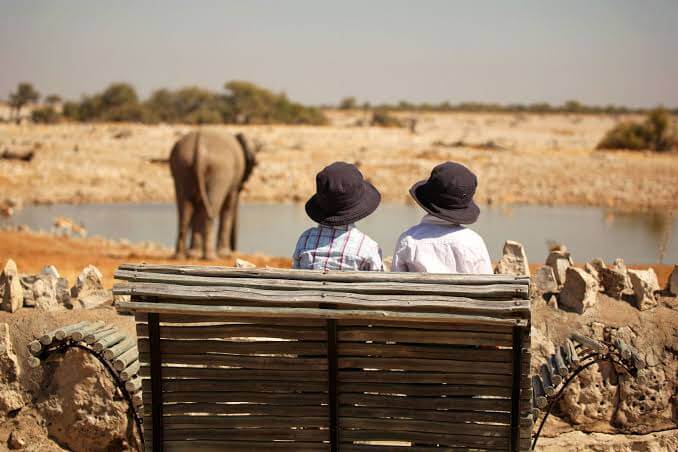
What Are the Best Educational Safaris in Kenya?
Kenya offers one of Africa’s most rewarding settings for an educational safari because learning does not stop when you leave the classroom. Across the country, students, families, teachers, researchers, and curious travelers can explore wildlife, ecosystems, conservation projects, local communities, geography, history, agriculture, and environmental science in real-world settings. An educational safari in Kenya combines adventure with practical learning, allowing visitors to understand how people, wildlife, land, and natural resources connect.
Unlike a traditional holiday that focuses mainly on sightseeing, an educational safari creates opportunities to observe, ask questions, record findings, and understand the reasons behind what you see. A visit to a wildlife conservancy can introduce students to endangered species and habitat protection. A trip to a forest can demonstrate the importance of water catchment areas. Likewise, visiting the coast can provide lessons in marine ecosystems, culture, trade, and history.
Kenya also gives travelers the chance to learn through different landscapes within one country. From the savannahs of the Maasai Mara and the grasslands around Amboseli to the lakes of the Rift Valley, highland forests, northern drylands, and Indian Ocean coastline, each region presents a different learning experience. Therefore, choosing the right destination depends on the age of the learners, educational goals, time available, and interests of the group.
For travelers seeking meaningful African experiences, the best educational safaris in Kenya combine expert guidance, responsible tourism, wildlife encounters, cultural understanding, and hands-on discovery. With careful planning, a safari can become both an unforgettable journey and a powerful outdoor classroom.
Combined Uganda, Kenya, Rwanda and Tanzania Safaris
17 days Kenya Tanzania and Uganda safari
19 Days Uganda Kenya and Tanzania Safari
16 Days Kenya Tanzania and Uganda Safari
14 Days Kenya Uganda and Tanzania Safari
14 Days Kenya Uganda and Rwanda Safari
12 Day Gorilla Trekking and Tanzania Safari
Why Choose Kenya for an Educational Safari?
Kenya stands out as an educational safari destination because it offers exceptional biodiversity within a relatively accessible travel network. Visitors can move from wildlife rich savannahs to forests, mountains, lakes, farms, and coastal ecosystems while studying different subjects along the way. This variety makes Kenya especially valuable for school trips, university field studies, family learning holidays, photography groups, and travelers who want more meaning from their African adventure.
Wildlife provides one of the strongest educational foundations. Kenya supports diverse species, including elephants, lions, giraffes, zebras, rhinos, buffaloes, hippos, and numerous bird species. However, an educational safari should go beyond simply identifying animals. A well-designed program explores animal behavior, food chains, habitats, migration, human-wildlife relationships, and conservation challenges.
Furthermore, Kenya offers important lessons in environmental management. Many protected areas and conservancies demonstrate different approaches to protecting wildlife while supporting surrounding communities. Learners can therefore examine how conservation affects livelihoods, tourism, land use, and local development.
Geography also becomes easier to understand in the field. The Great Rift Valley, Mount Kenya, volcanic landscapes, lakes, grasslands, forests, and coastal environments provide practical examples of geological and ecological processes. Instead of studying these subjects only through photographs or textbooks, travelers can experience the landscapes directly.
Most importantly, educational safaris encourage curiosity. A knowledgeable guide can turn an ordinary game drive into a lesson about animal tracks, plant adaptation, weather, geology, or conservation. Consequently, Kenya works particularly well for travelers who want education and adventure to become part of the same experience.
Maasai Mara National Reserve for Wildlife and Conservation Learning
The Maasai Mara National Reserve remains one of Kenya’s strongest destinations for wildlife-based education. Its open grasslands provide an excellent environment for studying large mammals, predator-prey relationships, animal behavior, ecosystems, and seasonal changes. Students and first-time safari travelers can observe animals in their natural environment while learning how different species interact with one another and depend on the wider ecosystem.
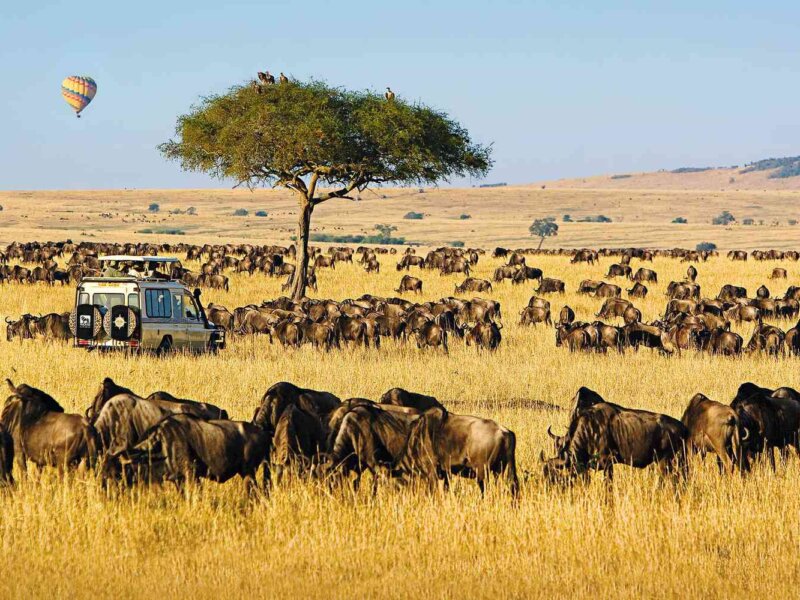
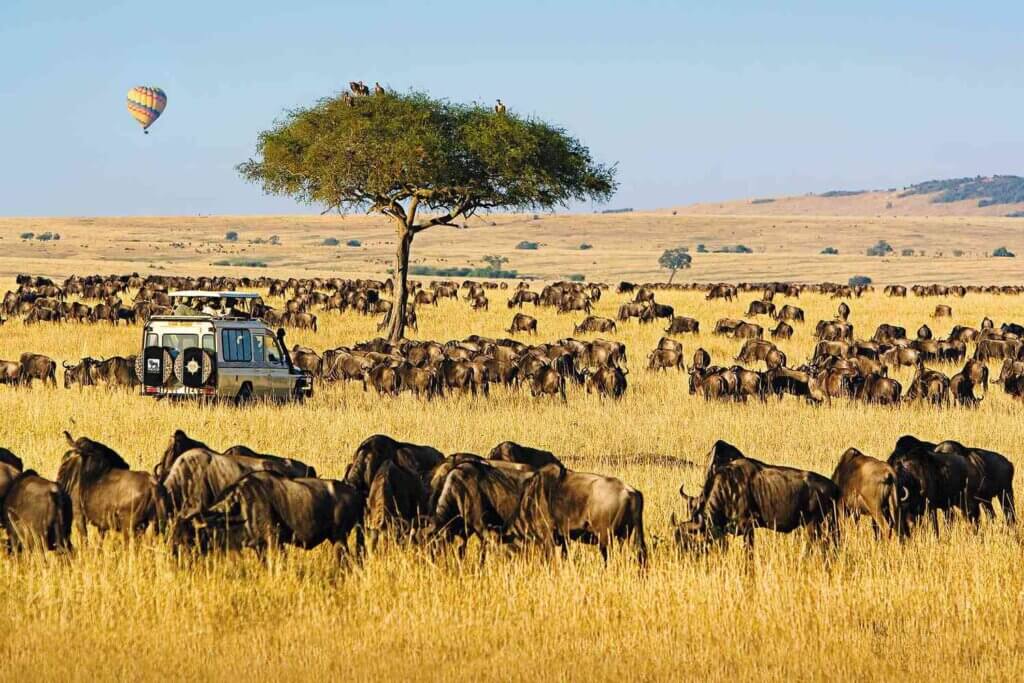
The reserve also provides an opportunity to understand the famous annual wildebeest migration. Although migration attracts international attention because of its dramatic wildlife scenes, the deeper educational value lies in understanding why animals move. Food availability, water, breeding cycles, weather, and ecosystem conditions all influence movement across the landscape. A good safari guide can explain these relationships while helping visitors understand that migration represents a complex natural system rather than simply a spectacular event.
Birdwatching adds another dimension to the learning experience. The Mara supports many bird species, making it useful for lessons in identification, feeding behavior, nesting, adaptation, and ecological relationships. Learners can keep field notes and compare different species observed during game drives.
The Maasai Mara also opens important conversations about conservation and community involvement. Tourism, livestock keeping, wildlife protection, land use, and community livelihoods often intersect around conservation areas. Therefore, an educational safari here can help visitors understand why protecting wildlife requires cooperation between conservation organizations, communities, tourism businesses, and government institutions.
Ol Pejeta Conservancy for Conservation and Wildlife Research
Ol Pejeta Conservancy offers a particularly strong educational experience for travelers interested in conservation, endangered species, wildlife management, and scientific research. Located in Kenya’s Laikipia region, the conservancy provides a practical setting for understanding the challenges involved in protecting wildlife while maintaining a functioning landscape for people and nature.
One of its major educational strengths comes from its conservation work involving rhinos. Visitors can learn about endangered species protection, habitat management, veterinary care, monitoring, and the wider challenges facing threatened wildlife. This creates an opportunity to move beyond the excitement of seeing animals and understand the intensive work required to protect them.
The conservancy also demonstrates how conservation can connect with community development and sustainable land management. Such lessons matter because modern conservation increasingly requires more than protected boundaries. Wildlife needs suitable habitats, communities need economic opportunities, and tourism needs to operate responsibly.
For students studying biology, environmental science, wildlife management, or conservation, Ol Pejeta can provide particularly valuable field observations. Learners can study animal behavior, habitat management, species identification, and conservation strategies while experiencing the landscape directly.
Another advantage is the ability to discuss the role of technology in conservation. Modern wildlife protection can involve monitoring systems, tracking, veterinary intervention, research, and data collection. This makes the destination useful for showing how science and technology support practical conservation.
For families, the educational value remains equally strong. Parents can use wildlife encounters as opportunities to discuss extinction, ecosystems, responsible tourism, and the importance of protecting biodiversity. As a result, a safari at Ol Pejeta can become a memorable conservation lesson for visitors of different ages.
Amboseli National Park for Elephant and Ecosystem Education
Amboseli National Park offers another outstanding educational safari experience, particularly for visitors interested in elephants, ecosystems, geography, and the relationship between wildlife and local communities. The park’s landscape, wildlife, and views toward Mount Kilimanjaro create a powerful setting for outdoor learning.
Elephants form one of the major educational attractions. Visitors can observe elephant herds while learning about their social behavior, feeding patterns, movement, communication, and role within ecosystems. Elephants also provide an excellent example of how a single species can influence vegetation and create changes within its habitat.
The park’s wetlands create another important learning opportunity. Water plays a critical role in sustaining wildlife within a relatively dry environment. Learners can explore how groundwater, seasonal rainfall, wetlands, vegetation, and animal movement interact. This makes Amboseli particularly useful for environmental science and geography lessons.
The wider ecosystem also encourages discussions about human-wildlife relationships. Communities around the park depend on land and natural resources for their livelihoods, while wildlife requires space and access to suitable habitats. Understanding this balance helps visitors appreciate why conservation requires long-term planning.
Amboseli also works well for photography and geography students because the landscape provides clear examples of changing vegetation, wildlife distribution, and natural scenery. A skilled guide can help travelers connect what they see with broader environmental processes.
Therefore, Amboseli is more than a destination for photographing elephants with Mount Kilimanjaro in the background. It is a living classroom where visitors can study wildlife, water, landscapes, conservation, and the complex connections between nature and people.
Lake Nakuru National Park for Birdlife and Environmental Studies
Lake Nakuru National Park provides a different educational safari experience because its learning opportunities extend beyond large mammals. The park forms part of the Great Rift Valley ecosystem and offers valuable lessons in birdlife, wetlands, vegetation, geology, and wildlife conservation.
Birdwatching can become a major focus of a visit. The park supports a wide range of bird species, and this diversity allows learners to explore bird identification, feeding habits, nesting behavior, migration, and adaptation. For young students, birdwatching can also develop observation skills because it encourages careful attention to movement, sound, shape, habitat, and behavior.
The lake and surrounding environment provide important lessons in wetland ecology. Wetlands support wildlife and contribute to wider environmental systems, making them useful examples when studying water, food chains, habitat protection, and biodiversity. Learners can observe how different animals use aquatic and terrestrial environments.
The park also supports mammals such as rhinos, giraffes, buffaloes, and other wildlife. Consequently, visitors can compare how species use different habitats within the same protected area.
The surrounding Rift Valley landscape adds another educational layer. Travelers can study geological formations and discuss how tectonic activity shaped East Africa’s dramatic valleys, escarpments, and lakes. This connection between geology and wildlife makes Lake Nakuru particularly useful for students interested in earth sciences.
Because the destination combines wildlife, birds, water, and geology, it works well for multidisciplinary educational trips. A single visit can support lessons in biology, geography, environmental science, ecology, and photography.
Mount Kenya for Geography, Ecology, and Outdoor Learning
Mount Kenya provides an excellent setting for travelers who want an educational safari that combines wildlife with mountain ecology, geography, climate, and outdoor adventure. As one of Africa’s most important mountain environments, it offers different ecological zones as altitude increases.
A journey around Mount Kenya can help learners understand how elevation influences temperature, vegetation, wildlife, and weather. The landscape changes as travelers move through different habitats, creating a practical demonstration of ecological zonation. Instead of studying altitude effects from a diagram, visitors can experience changes in vegetation and climate across the mountain environment.
The region also supports discussions about water resources. Mountain ecosystems play an important role in water catchment, and rivers flowing from highland areas support communities, agriculture, wildlife, and other economic activities. This creates a valuable connection between environmental protection and human development.
Outdoor learning also becomes central to a Mount Kenya experience. Hiking, nature walks, birdwatching, and guided ecological excursions can encourage physical activity while developing observation and environmental awareness.
The surrounding agricultural areas add another dimension. Visitors can learn about farming practices, rural livelihoods, soil, climate, and the relationship between highland environments and food production.
For university students and older learners, Mount Kenya can support more advanced field studies in ecology, geography, environmental management, climate, and conservation. For families, it provides a more relaxed opportunity to introduce children to mountains, forests, wildlife, and responsible outdoor travel.
As a result, Mount Kenya offers educational value that extends well beyond mountain climbing. It demonstrates how altitude, climate, water, forests, agriculture, wildlife, and human communities interact within one landscape.
Nairobi National Park and Giraffe Centre for Accessible Learning
Nairobi offers a unique advantage for educational safari travelers because wildlife experiences are available close to a major African capital. Nairobi National Park provides an opportunity to study wildlife and conservation without traveling deep into the countryside. This makes it particularly practical for short educational trips, school groups, families with limited time, and travelers arriving or departing through Nairobi.
The park supports a variety of wildlife and provides an important example of how protected areas can exist alongside a rapidly growing city. This creates an excellent opportunity to discuss urban development, conservation planning, land use, wildlife corridors, and environmental pressure.
The nearby Giraffe Centre adds another useful learning experience, particularly for younger visitors. A visit can introduce learners to giraffe biology, behavior, habitat needs, and conservation. Children can develop a stronger interest in wildlife because the experience allows them to observe these animals closely in an educational setting.
Nairobi also provides access to museums, cultural institutions, conservation organizations, and other learning attractions. Therefore, travelers can combine wildlife education with lessons in Kenyan history, culture, science, and society.
For schools, this combination can reduce travel time while increasing the number of educational activities available during a short program. Students can spend part of the day studying wildlife and another part exploring cultural or historical subjects.
This makes Nairobi an excellent starting point for an educational safari. It demonstrates that meaningful wildlife learning does not always require a long journey. With careful planning, a short stay can introduce travelers to conservation, urban ecology, Kenyan culture, wildlife, and environmental responsibility.
Tsavo National Parks for Geography, Wildlife, and Conservation
Tsavo East and Tsavo West provide broad landscapes that are especially valuable for travelers interested in geography, wildlife ecology, conservation, and the challenges of managing large protected areas. Together, the parks form one of Kenya’s most significant wildlife regions.
The size and varied landscapes of Tsavo create opportunities to study how wildlife adapts to dry environments. Visitors can observe how animals use water sources, vegetation, shade, and different habitats. Such observations help explain survival strategies in ecosystems where rainfall can vary significantly.
Tsavo also provides useful lessons about elephants and other large mammals. Wildlife behavior changes according to food, water, temperature, seasons, and human activity. Watching these patterns in the field can make ecological concepts much easier to understand.
The volcanic landscapes and geological features of Tsavo West add another layer to an educational safari. Travelers can explore how geological forces shape landscapes and influence soil, water, vegetation, and human settlement.
Furthermore, Tsavo creates opportunities to discuss conservation across large landscapes. Protecting wildlife requires more than managing individual animals. It also involves protecting habitats, maintaining ecological connections, managing water, reducing human-wildlife conflict, and supporting communities.
For international visitors, Tsavo offers an important lesson in the scale of African conservation. The experience encourages travelers to see Kenya’s protected areas as complex ecosystems rather than simple destinations for wildlife viewing.
Kenyan Coast for Marine, Cultural, and Historical Education
An educational safari in Kenya does not have to focus entirely on savannah wildlife. The Kenyan coast provides a completely different learning environment where travelers can study marine ecosystems, coastal geography, history, culture, architecture, trade, and traditional livelihoods.
Marine environments create opportunities to explore coral reefs, fish, sea turtles, mangroves, beaches, and other coastal ecosystems. Guided marine activities can introduce visitors to the importance of ocean health and the pressures facing coastal environments. Pollution, overfishing, habitat loss, climate change, and responsible tourism can all become part of the learning experience.
The coast also offers valuable cultural education. Coastal communities have developed rich traditions shaped by centuries of interaction across the Indian Ocean. Food, architecture, language, music, crafts, and trade history provide opportunities to understand Kenya beyond its wildlife.
Historic destinations such as Lamu and Mombasa can help learners explore the long history of coastal trade and cultural exchange. Architecture and old settlements provide physical evidence of the region’s past.
This combination makes the Kenyan coast particularly useful for multidisciplinary educational travel. A single trip can connect marine biology with geography, history, culture, economics, and environmental studies.
For families, coastal learning can also provide a welcome change after several days of game drives. For students, it expands the idea of an African safari by showing that Kenya’s natural and cultural heritage extends from inland savannahs to the Indian Ocean.
How to Choose the Right Educational Safari in Kenya
Choosing the best educational safari requires more than selecting the most famous national park. The destination should match the learning objectives, age group, travel period, budget, and interests of the travelers. A safari designed for primary school children will naturally differ from a university field study or an adult conservation-focused journey.
Start by identifying the main subject. Wildlife biology groups may benefit from destinations such as the Maasai Mara or Ol Pejeta. Students interested in elephants and dryland ecosystems may find Amboseli more suitable. Geography learners can gain valuable field experience around the Rift Valley and Mount Kenya, while marine studies fit naturally along the Kenyan coast.
Next, consider the length of the trip. Short programs can focus on Nairobi National Park and nearby attractions, while longer itineraries can combine several ecosystems. Combining destinations can also strengthen learning because students can compare different environments rather than studying one location in isolation.
The quality of guiding matters just as much. An experienced safari guide should do more than locate animals. The guide should explain behavior, ecology, conservation, local culture, geography, and responsible travel in a way that suits the group’s age and knowledge level.
Finally, consider conservation and community impact. Choose experiences that respect wildlife, local communities, natural resources, and protected area rules. Responsible planning ensures that educational travel contributes positively to the destinations being studied.
What Makes an Educational Safari Different from a Regular Safari?
A regular safari may focus primarily on relaxation, photography, wildlife viewing, and sightseeing. An educational safari adds a clear learning purpose to those experiences. Instead of simply seeing a lion, for example, learners can examine predator behavior, territory, prey selection, social structures, and the animal’s role within the ecosystem.
Preparation also makes a major difference. Before traveling, students can learn about the destination, create research questions, prepare field journals, and identify species they hope to observe. During the safari, they can record observations and compare what they expected with what they actually encounter.
After the trip, the learning can continue through presentations, reports, photography projects, conservation discussions, or classroom assignments. In this way, the safari becomes part of a wider educational process.
Another difference involves the guide. Educational travel benefits from guides who understand both the destination and the learning needs of the group. Good interpretation connects what visitors see with broader concepts instead of overwhelming them with disconnected facts.
The strongest educational safaris also encourage responsible behavior. Visitors learn why they should maintain safe distances from animals, avoid disturbing wildlife, respect communities, follow park regulations, reduce waste, and protect natural areas.
Therefore, an educational safari does not remove the fun and excitement of travel. Instead, it gives every experience greater meaning. The wildlife remains exciting, the landscapes remain beautiful, and the adventure remains memorable, but travelers return with knowledge that stays with them long after the journey ends.
Best Time to Take an Educational Safari in Kenya
Kenya offers educational safari opportunities throughout much of the year, but the ideal travel period depends on the destination and learning objectives. Wildlife viewing, birdwatching, hiking, marine activities, and cultural experiences can all respond differently to seasonal conditions.
Dry periods often make wildlife easier to observe because animals may gather around available water sources and vegetation becomes less dense in many areas. This can benefit learners who want to focus on animal behavior and identification. However, wetter periods also provide valuable educational opportunities because landscapes become greener, many animals respond to changing food availability, and bird activity can be rewarding.
The timing of an educational trip should therefore depend on what travelers want to study rather than simply following the idea that one season is always best.
Schools and institutions should also consider academic calendars, travel budgets, accommodation availability, and group size. Booking early can make it easier to secure suitable accommodation and guides, particularly for larger groups.
Weather should also influence preparation. Learners need suitable clothing, comfortable footwear, sun protection, water, notebooks, binoculars where appropriate, and other practical items suited to the destination.
Most importantly, travelers should remain flexible. Nature does not operate according to a fixed timetable. Wildlife sightings cannot be guaranteed, and environmental conditions can change. That uncertainty actually strengthens the educational value because learners experience firsthand how ecosystems change and how field researchers work with observation rather than certainty.
Responsible Travel on an Educational Safari
Responsible tourism should form part of every educational safari because the journey itself can become a lesson in conservation. Travelers should understand that protected areas are living ecosystems rather than entertainment spaces. Wildlife needs room, quiet, suitable habitats, and protection from unnecessary disturbance.
Visitors should follow park regulations and guide instructions at all times. Maintaining appropriate distances from animals protects both wildlife and people. Travelers should also avoid feeding animals, leaving waste behind, making excessive noise, or attempting to attract wildlife for photographs.
Respect for local communities matters equally. Kenya’s conservation landscapes exist alongside communities with their own histories, cultures, livelihoods, and traditions. Educational travel should create opportunities to learn respectfully rather than treating communities as attractions.
Travelers can also support responsible tourism by choosing operators that value local employment, conservation, ethical wildlife experiences, and community partnerships. Spending with local businesses can help tourism benefits reach communities surrounding important destinations.
Environmental responsibility should continue throughout the journey. Reducing unnecessary plastic use, conserving water, respecting natural habitats, and avoiding activities that harm wildlife or ecosystems all contribute to better tourism practices.
For students, these actions become practical lessons in sustainability. They demonstrate that responsible travel involves choices made before, during, and after a trip.
Ultimately, an educational safari should leave visitors with more than photographs and memories. It should create a stronger understanding of why Kenya’s natural and cultural heritage deserves protection and how responsible tourism can support that goal.
Final Thoughts
The best educational safaris in Kenya are those that turn travel into meaningful discovery. From the wildlife-rich plains of the Maasai Mara and the conservation landscape of Ol Pejeta to the elephant country of Amboseli, the ecosystems of the Rift Valley, the mountain environment around Mount Kenya, and the marine and cultural heritage of the Kenyan coast, Kenya offers an impressive range of learning opportunities.
The right safari should match the interests and goals of the travelers. Students can study biology, geography, conservation, history, culture, and environmental science in the field. Families can introduce children to wildlife and nature through memorable experiences. Universities and research groups can use carefully planned journeys for deeper field observation.
Most importantly, educational travel should combine expert guidance with responsible tourism. When travelers understand what they see, respect the environment, and connect wildlife conservation with local communities, the safari becomes much more valuable.
For travelers planning a meaningful journey through Kenya and the wider East African region, Giant Holiday Safaris provides the trusted tour-planning experience needed to turn educational interests into well-organized African adventures. With thoughtful itinerary design, destination knowledge, responsible travel principles, and a strong focus on authentic experiences, Giant Holiday Safaris can help travelers explore Kenya with confidence while gaining a deeper understanding of the landscapes, wildlife, people, and conservation stories that make Africa extraordinary.