Why is Uganda called the Pearl of Africa
July 31, 2026
Where Can I See Rhinos in Tanzania
July 31, 2026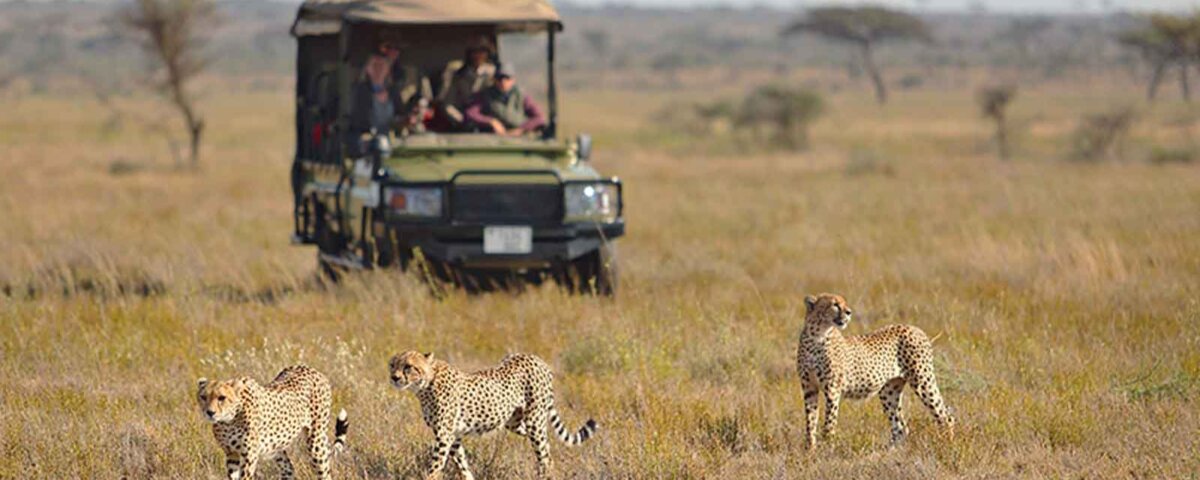
Can I See Cheetahs in Serengeti
Many wildlife enthusiasts ask, can I see cheetahs in Serengeti, when planning their dream safari to Tanzania. The answer is a definite yes. Serengeti National Park is one of the best places in Africa to observe cheetahs living and hunting in the wild. Its vast open plains, healthy prey populations, and protected ecosystems create ideal conditions for these graceful predators to thrive.
Unlike lions that often hunt in groups, cheetahs rely on speed, sharp eyesight, and stealth. Watching one scan the horizon before launching into an incredible chase is one of the most exciting experiences a safari can offer. Every encounter gives visitors a deeper appreciation for the remarkable adaptations that make cheetahs the fastest land animals on Earth.
The Serengeti offers excellent opportunities to see cheetahs throughout the year, although certain seasons and locations provide even better chances. Choosing the right safari itinerary, travelling at the right time, and exploring the park with experienced guides all contribute to successful wildlife viewing.
Planning your adventure with Giant Holiday Safaris also helps maximize your opportunities to see cheetahs while enjoying Tanzania’s spectacular landscapes and abundant wildlife. Their carefully designed safari experiences combine local expertise with personalized service to create unforgettable journeys.
Understanding can I see cheetahs in Serengeti allows travellers to prepare for one of Africa’s most rewarding wildlife adventures.
Combined Uganda, Kenya, Rwanda and Tanzania Safaris
17 days Kenya Tanzania and Uganda safari
19 Days Uganda Kenya and Tanzania Safari
16 Days Kenya Tanzania and Uganda Safari
14 Days Kenya Uganda and Tanzania Safari
14 Days Kenya Uganda and Rwanda Safari
12 Day Gorilla Trekking and Tanzania Safari
Can I See Cheetahs in Serengeti?
If you have been wondering can I see cheetahs in Serengeti, you will be pleased to know that Serengeti National Park supports one of Africa’s healthiest wild cheetah populations. The park’s expansive grasslands provide exactly the type of environment these remarkable cats need for survival.
Cheetahs depend on open spaces because they hunt by sight rather than smell. They use their incredible eyesight to locate prey from a distance before quietly stalking close enough to launch explosive high-speed chases. Serengeti’s endless plains allow cheetahs to fully utilize their unmatched speed while hunting gazelles, impalas, young wildebeests, and other small antelope.
Visitors regularly encounter cheetahs resting on termite mounds, fallen logs, or small rocky outcrops known as kopjes. These elevated positions give them clear views across the surrounding plains while helping them locate prey or detect approaching predators.
Unlike lions and leopards, cheetahs generally avoid confrontation with larger predators. They often remain active during daylight hours because lions and hyenas are usually more active at night. This daytime activity gives safari visitors excellent opportunities to observe cheetahs during morning and afternoon game drives.
Although wildlife sightings can never be guaranteed, spending several days in Serengeti with experienced guides greatly increases your chances of enjoying unforgettable cheetah encounters.
Why Serengeti Is One of the Best Places to See Cheetahs
Serengeti National Park consistently ranks among the world’s finest destinations for observing wild cheetahs. Several natural factors combine to create an ideal habitat that supports healthy cheetah populations throughout the year.
First, the Serengeti contains vast open grasslands that perfectly match the hunting style of cheetahs. Unlike dense forests where visibility remains limited, these wide plains allow cheetahs to identify prey from long distances before carefully planning their approach.
Second, the park supports enormous populations of herbivores. Thomson’s gazelles, Grant’s gazelles, impalas, young wildebeests, and other antelope provide abundant food sources that help sustain healthy predator populations. This balance between predators and prey allows cheetahs to survive naturally within the ecosystem.
Another advantage is the size of the Serengeti ecosystem. Covering thousands of square kilometres, the park gives cheetahs plenty of space to establish territories, raise cubs, and avoid unnecessary competition with larger predators.
Conservation efforts also contribute significantly to the cheetah population’s success. Tanzania continues protecting the Serengeti through careful wildlife management, anti poaching initiatives, scientific research, and responsible tourism practices. These efforts allow visitors to enjoy authentic wildlife experiences while supporting long term conservation.
Finally, professional safari guides possess extensive knowledge of cheetah behaviour and movement patterns. Their experience helps visitors locate cheetahs more efficiently while respecting the animals and preserving their natural behaviour.
Together, these factors make Serengeti one of the very best places in Africa to witness wild cheetahs.
Where Cheetahs Are Commonly Found in Serengeti
Although cheetahs move freely throughout Serengeti National Park, some areas consistently provide better viewing opportunities than others. Understanding these preferred habitats helps visitors maximize their chances of successful sightings during their safari.
The southeastern plains are among the most productive locations for spotting cheetahs. These wide open grasslands provide excellent visibility while supporting large populations of gazelles and other small antelope. The flat terrain allows cheetahs to fully utilize their extraordinary speed when pursuing prey.
Central Serengeti also offers excellent cheetah sightings. Around the Seronera region, visitors often encounter cheetahs resting on termite mounds or scanning nearby grasslands before beginning a hunt. This area combines open plains with scattered trees, seasonal rivers, and abundant wildlife.
The southern Serengeti becomes especially attractive during the calving season between January and March. Thousands of newborn wildebeest and gazelles provide plentiful hunting opportunities for cheetahs raising cubs. Predator activity increases significantly during this period, creating exciting safari experiences.
Northern Serengeti occasionally produces cheetah sightings as well, although this region is better known for the dramatic Mara River crossings during the Great Migration.
Throughout the park, termite mounds serve as excellent places to search for cheetahs. These natural platforms give the cats elevated viewpoints that improve hunting success while helping safari guides locate them from a distance.
Exploring several different regions of the Serengeti increases the likelihood of encountering these elegant predators.
How Cheetahs Hunt on the Serengeti Plains
Watching a cheetah hunt ranks among the most thrilling wildlife experiences available anywhere in Africa. Unlike many other predators, cheetahs rely almost entirely on speed, vision, and careful planning rather than strength or teamwork.
The hunt begins with careful observation. A cheetah quietly scans the surrounding plains from an elevated position, searching for vulnerable prey. Once it identifies a suitable target, it slowly approaches while using grass and natural cover to remain hidden.
When the distance becomes short enough, the cheetah explodes into action. Within seconds, it accelerates faster than almost any other land animal, reaching incredible speeds that allow it to chase down fast moving prey across open ground.
However, these breathtaking sprints require enormous energy. Most chases last less than one minute because the intense effort quickly exhausts the cheetah. If the prey escapes during those critical moments, the cheetah usually abandons the pursuit rather than continuing the chase.
Successful hunts require remarkable precision. Sharp eyesight, flexible spines, powerful muscles, long legs, and specialized claws all contribute to the cheetah’s extraordinary hunting ability.
After making a successful kill, the cheetah must eat quickly because stronger predators such as lions, leopards, or hyenas may steal its meal. This constant competition highlights the daily challenges cheetahs face while surviving in one of Africa’s most competitive ecosystems.
Witnessing this remarkable hunting strategy gives visitors a deeper appreciation for Serengeti’s incredible wildlife.
Best Time to See Cheetahs in Serengeti
One of the greatest advantages of visiting Serengeti National Park is that cheetahs can be seen throughout the year. Nevertheless, certain seasons provide better viewing conditions and higher chances of memorable encounters.
The dry season, generally from June through October, remains one of the best times to search for cheetahs. During these months, shorter grass improves visibility while animals gather near permanent water sources. Visitors often find it easier to spot both predators and prey across the open plains.
The calving season between January and March also provides outstanding cheetah viewing opportunities. Thousands of wildebeest calves and young gazelles are born across the southern Serengeti, creating abundant hunting opportunities for predators. Female cheetahs raising cubs become especially active during this period as they search for food.
Morning game drives usually produce the highest success rates. Cooler temperatures encourage cheetahs to hunt before the midday heat arrives. Late afternoon also offers excellent viewing conditions as wildlife becomes more active again.
Although the rainy seasons bring greener landscapes and beautiful scenery, taller grass may sometimes make wildlife slightly harder to locate. However, experienced safari guides continue finding cheetahs throughout the year by understanding seasonal movement patterns and preferred habitats.
Ultimately, every season offers unique advantages. Careful planning, knowledgeable guides, and several days inside Serengeti National Park provide the best opportunities to answer the question, can I see cheetahs in Serengeti, with an unforgettable wildlife experience.
Tips for Spotting Cheetahs During Your Safari
Spotting cheetahs in the Serengeti requires patience, careful observation, and the guidance of experienced safari professionals. Although Serengeti National Park offers excellent opportunities to see these remarkable cats, understanding their behaviour will greatly improve your chances of a successful sighting.
Start your game drives early in the morning. Cheetahs are most active during the cooler hours of the day when they hunt or search for prey. They often rest during the hottest part of the afternoon before becoming active again later in the day. Early morning and late afternoon game drives therefore provide the best opportunities to observe natural behaviour.
Pay attention to open grasslands rather than dense woodlands. Cheetahs depend on wide open spaces where they can use their incredible speed to chase prey. They frequently climb termite mounds, fallen logs, or small rocky outcrops to scan the surrounding plains. Looking at these elevated spots often helps visitors locate resting cheetahs.
Listen carefully to your safari guide. Professional guides know the areas where cheetahs regularly appear and understand their daily movement patterns. Their experience often makes the difference between simply driving through the park and enjoying unforgettable wildlife encounters.
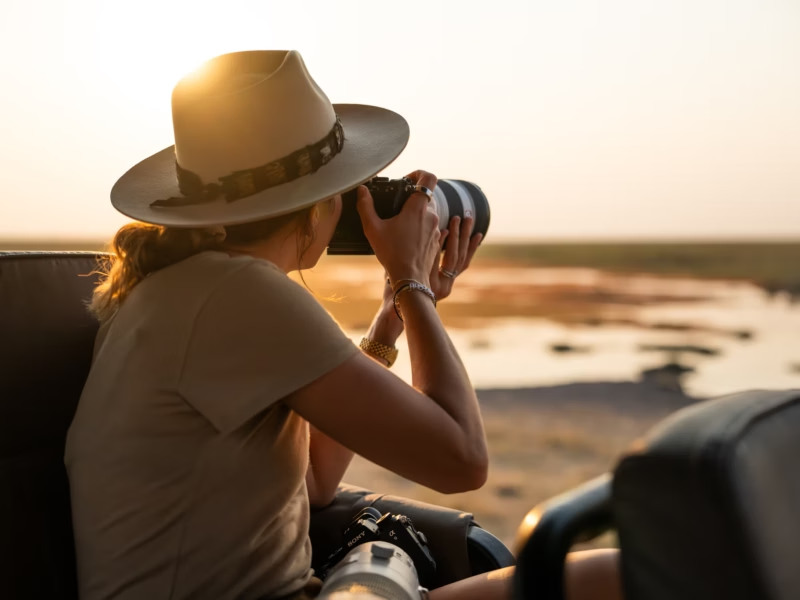
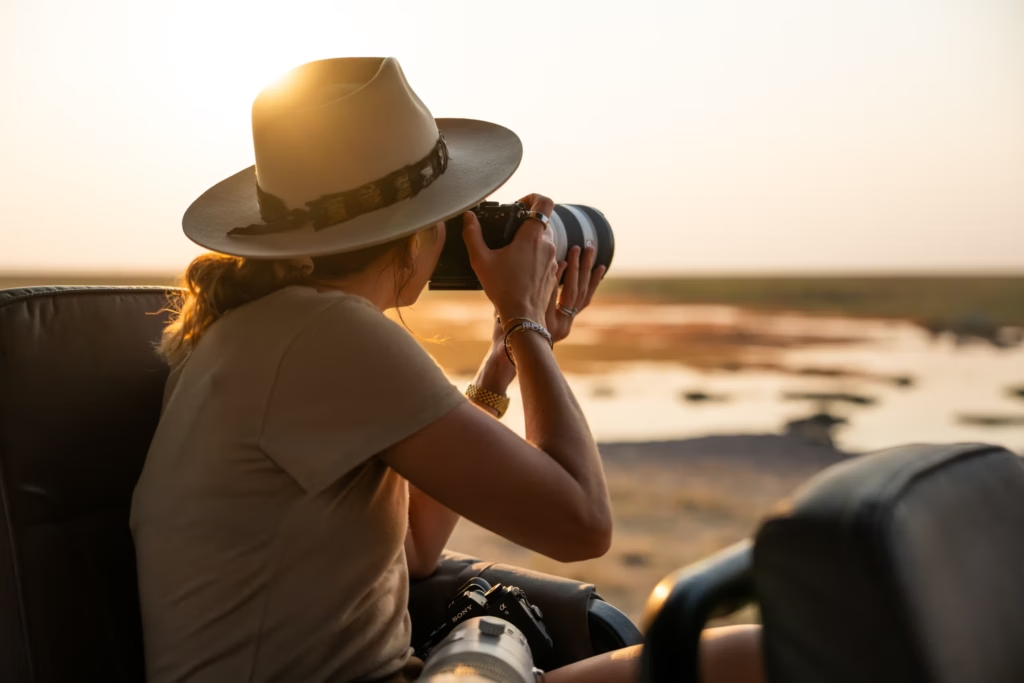
Bring binoculars and a camera with a zoom lens. Cheetahs may remain hundreds of metres away while watching prey, so quality optics allow you to observe fascinating behaviour without disturbing the animals.
Most importantly, remain patient. Wildlife sightings happen naturally, and every safari is different. Sometimes the greatest moments arrive unexpectedly, making every successful cheetah encounter even more rewarding.
Common Mistakes to Avoid When Looking for Cheetahs
Careful planning helps travellers avoid mistakes that may reduce their chances of seeing cheetahs during a Serengeti safari. Fortunately, most of these challenges are simple to prevent with realistic expectations and good preparation.
One common mistake involves expecting cheetahs to appear immediately after entering the park. Unlike zoo animals, wild cheetahs roam freely across enormous territories. Patience remains essential because sightings depend on natural wildlife movements rather than fixed locations.
Another mistake is focusing only on lions or the Great Migration. While these attractions deserve attention, keeping an open mind allows visitors to appreciate every wildlife encounter. Sometimes the most memorable safari moment comes from quietly observing a cheetah preparing for a hunt.
Choosing very short safari itineraries also reduces viewing opportunities. Spending additional days in Serengeti allows guides more time to search different regions while adapting to changing wildlife conditions.
Ignoring guide instructions can also affect the experience. Professional guides understand where cheetahs are likely to appear and know how to approach wildlife responsibly without causing unnecessary disturbance.
Some travellers also pack inappropriate clothing. Bright colours attract attention, while uncomfortable shoes or insufficient sun protection reduce comfort during long game drives. Neutral clothing, hats, sunscreen, reusable water bottles, and binoculars contribute to a much more enjoyable safari.
Finally, avoid rushing from one sighting to another. Spending extra time observing cheetah behaviour often creates deeper appreciation and better photography opportunities than constantly chasing new wildlife sightings.
Experience the Beauty of Serengeti’s Cheetahs
If you have been asking can I see cheetahs in Serengeti, the answer is a confident yes. Serengeti National Park remains one of Africa’s finest destinations for observing these graceful predators in their natural habitat. The park’s open plains, abundant prey, and protected ecosystems provide ideal conditions for healthy cheetah populations throughout the year.
Every safari offers unique opportunities to witness fascinating wildlife behaviour. Whether you see a cheetah scanning the horizon from a termite mound, quietly stalking gazelles, or sprinting across the plains in pursuit of prey, each encounter creates unforgettable memories that showcase the remarkable beauty of African wildlife.
Choosing an experienced safari operator further enhances your adventure. Giant Holiday Safaris carefully designs itineraries that maximize wildlife viewing while providing knowledgeable guides, comfortable accommodation, dependable transportation, and outstanding customer service. Their local expertise helps visitors enjoy the very best of Serengeti while respecting conservation principles and responsible tourism practices.
Beyond seeing cheetahs, travellers also experience one of the world’s richest wildlife ecosystems. Lions, elephants, giraffes, zebras, wildebeests, leopards, hyenas, and countless bird species all contribute to the extraordinary diversity that makes the Serengeti famous around the globe.
Whether you are planning your first African safari or returning for another adventure, can I see cheetahs in Serengeti remains one of the easiest questions to answer. With thoughtful planning, experienced guides, and Tanzania’s spectacular national parks, you can enjoy incredible cheetah sightings and discover why the Serengeti continues to inspire wildlife lovers from every corner of the world.