What are the best sunset safari experiences in Kenya?
August 19, 2026
Can beginners enjoy Kenya safari photography?
August 19, 2026
What Are the Best Camera Lenses for Safari?
A safari gives you a rare chance to photograph wildlife in its natural environment. From a lion resting beneath an acacia tree to an elephant crossing an open plain, every moment can change within seconds. However, capturing these scenes well requires more than a good camera body. Your choice of safari camera lens can make a major difference in image quality, reach, focus speed, and your ability to react to fast-moving animals.
The best camera lens for safari depends on the type of wildlife you want to photograph, the distance between you and the animals, the light available during your game drives, and the kind of safari experience you plan to enjoy. A lens that works beautifully for elephants at close range may not provide enough reach for a leopard resting high in a tree. Likewise, an extremely long telephoto lens can become difficult to manage inside a safari vehicle.
For most travelers, a versatile telephoto zoom lens offers the strongest balance. A range such as 100–400mm or 200–500mm can provide enough reach for distant wildlife while still allowing you to photograph larger animals when they come closer. However, professional wildlife photographers may prefer longer and faster lenses such as 400mm, 500mm, or 600mm prime lenses because they offer exceptional reach, sharpness, and low-light performance.
Safari photography also requires you to think beyond the lens itself. African wildlife often appears during early morning and late afternoon game drives when the light looks beautiful but remains relatively low. Therefore, aperture, image stabilization, autofocus performance, weight, and handling all matter.
Whether you plan to photograph wildlife in Kenya, Tanzania, Uganda, Botswana, Namibia, South Africa, Zambia, or another African safari destination, selecting the right lens helps you make the most of every sighting. The goal is not simply to own the biggest lens. Instead, you want a lens that matches the environment, your camera system, and the way you intend to experience Africa.
Combined Uganda, Kenya, Rwanda and Tanzania Safaris
17 days Kenya Tanzania and Uganda safari
19 Days Uganda Kenya and Tanzania Safari
16 Days Kenya Tanzania and Uganda Safari
14 Days Kenya Uganda and Tanzania Safari
14 Days Kenya Uganda and Rwanda Safari
12 Day Gorilla Trekking and Tanzania Safari
What Makes a Camera Lens Good for Safari Photography?
A good safari lens needs to solve several challenges at the same time. Wildlife rarely stays in one place, and you cannot always control how close you get. Furthermore, safari vehicles normally follow established tracks, while some parks and conservancies maintain strict viewing distances to protect animals and reduce stress. Because of these conditions, focal length becomes one of the most important factors when choosing your equipment.
A strong safari lens should provide useful reach without becoming so large that it becomes difficult to handle. It should also focus quickly because animals can move without warning. Fast autofocus becomes especially valuable when photographing running cheetahs, birds in flight, monkeys moving through vegetation, or predators suddenly becoming active.
Image stabilization also adds significant value. You may spend long periods holding your camera while waiting for an animal to move into a better position. Stabilization helps reduce camera shake, particularly when using longer focal lengths. However, stabilization cannot freeze a moving animal. For that reason, you still need a sufficiently fast shutter speed when photographing active wildlife.
A wide maximum aperture can also improve safari photography. Lenses with apertures such as f/2.8 or f/4 allow more light to reach the camera sensor. They can therefore perform better during sunrise, sunset, cloudy conditions, and shaded woodland environments. A wider aperture can also create a soft background that separates an animal from distracting vegetation.
Durability matters as well. Dust forms part of everyday safari life, especially on dry roads and during long game drives. A well built, weather sealed lens can provide greater confidence when working in challenging outdoor conditions. Ultimately, the best safari lens combines reach, speed, sharpness, stabilization, reliability, and manageable weight.
Telephoto Zoom Lenses: The Best Choice for Most Safari Travelers
For many safari travelers, a telephoto zoom lens provides the most practical solution. Unlike a fixed focal-length lens, a zoom lets you change your composition without changing lenses. This becomes extremely useful when wildlife suddenly moves closer or farther away.
A 100–400mm lens represents one of the most useful ranges for general safari photography. At 100mm, you can photograph larger animals at moderate distances and include more of the surrounding landscape. When an animal moves farther away, you can extend the lens toward 400mm and capture tighter portraits. This flexibility makes the range suitable for photographers who want to travel light.
A 200–500mm or 200–600mm lens provides even greater reach. These lenses work particularly well when animals remain far from the vehicle. You can capture detailed images of lions, leopards, cheetahs, elephants, buffalo, giraffes, and many smaller animals without needing to approach them closely. They also work well for birds, which often require considerable focal length.
However, longer lenses usually add weight. You should therefore consider how long you will hold the camera and whether you will photograph from a vehicle, a tripod, or a beanbag. A huge lens may deliver impressive reach, but it becomes less attractive if it makes your camera difficult to handle throughout a full day of game viewing.
For this reason, a quality telephoto zoom often represents the best starting point for safari travelers. It provides flexibility, reach, and convenience while allowing you to concentrate on the wildlife experience instead of constantly changing equipment.
Is a 100–400mm Lens Good for Safari?
A 100–400mm lens can be an excellent safari companion, especially for travelers who want one versatile wildlife lens. Its focal range covers many common safari situations, from environmental wildlife portraits to tighter animal details. You can begin at 100mm when an elephant approaches your vehicle and then move toward 400mm when a distant lion rests across the plains.
Another advantage comes from its relatively manageable size. Safari vehicles have limited personal space, particularly when several travelers share the same row. A massive professional telephoto lens can occupy valuable room and become difficult to maneuver. A 100–400mm lens generally offers a more comfortable balance between reach and portability.
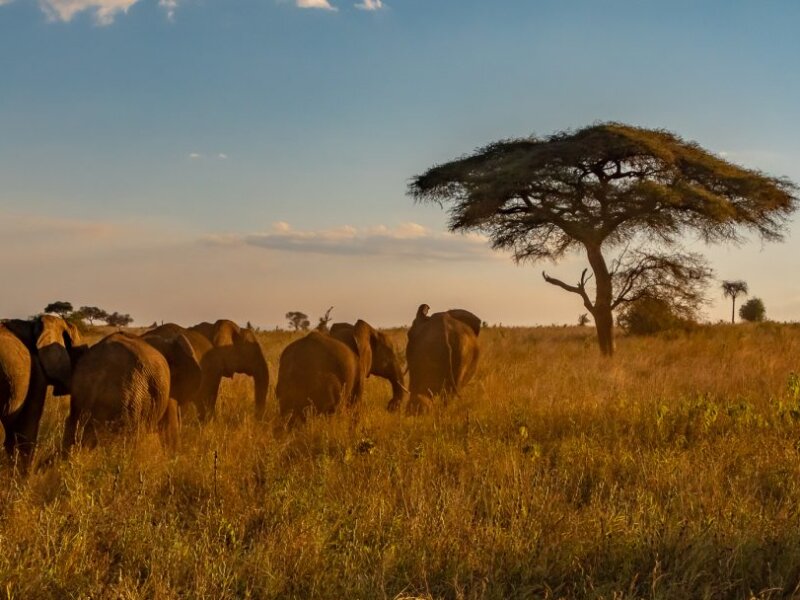
This range also works well for photographers who want to combine wildlife and landscape photography. Safari photography does not always require a close-up portrait. Sometimes the most powerful image shows an animal within its environment. A lion beneath a huge sky, giraffes walking across a golden plain, or elephants moving through a dusty landscape can tell a stronger story than a tightly cropped photograph.
The 100–400mm range also suits travelers who may explore several types of African destinations. In open savannah environments, you may appreciate longer focal lengths. In wooded areas, animals may approach much closer, making the shorter end of the zoom particularly useful.
Therefore, if you want a practical, flexible, and travel-friendly lens, a 100–400mm zoom deserves serious consideration. It may not provide the extreme reach of a 600mm lens, but its versatility makes it one of the most useful choices for general safari photography.
Are 200–600mm Lenses Better for Wildlife Safaris?
A 200–600mm lens can provide a major advantage when wildlife remains at a distance. African parks and conservancies contain vast landscapes, and animals may spend much of their time far from safari vehicles. A long telephoto lens allows you to fill more of the frame without physically moving closer.
The 600mm end becomes particularly valuable for smaller animals and birds. You can photograph a bird perched on a distant branch, a leopard partially hidden among vegetation, or a lion’s face across an open grassland. The additional reach also gives you more freedom to create tight compositions that emphasize eyes, facial expressions, horns, fur, and other details.
However, you should not automatically assume that a longer lens always produces better safari photographs. A 200–600mm lens can become heavy, and its size may make it less convenient inside a vehicle. You also lose the wider field of view available from lenses starting around 100mm. If an elephant suddenly approaches within a few meters, you may struggle to fit the entire animal into the frame.
Therefore, a 200–600mm lens works best when you understand your photography style. It suits travelers who prioritize distant wildlife, birds, and detailed animal portraits. It also works especially well with modern mirrorless cameras that offer strong autofocus and image stabilization.
For serious wildlife photographers, this focal range provides remarkable flexibility. For casual travelers, however, a shorter and lighter telephoto zoom may prove easier and more enjoyable to use throughout the safari.
What Is the Best Lens for Photographing Lions, Leopards, and Cheetahs?
Big cats create some of the most exciting safari photography opportunities, but each species can present different challenges. Lions often rest in open areas and may approach vehicles closely. Leopards can remain hidden in trees or thick vegetation, while cheetahs may move rapidly across open plains. As a result, photographers need both reach and responsiveness.
A 100–400mm lens can work extremely well for lions because these large cats often come relatively close to safari vehicles. You can use the shorter focal lengths for full-body images and environmental portraits, then zoom in when the lion settles farther away.
Leopards often benefit from longer focal lengths. These cats can remain high in trees or disappear into dense vegetation, making 400mm, 500mm, or 600mm particularly useful. A longer lens allows you to photograph the animal without needing to move closer and potentially disturb the scene.
Cheetahs present another challenge because they can move quickly. Autofocus performance becomes extremely important when a cheetah starts running. A lens that focuses quickly and accurately helps you keep the animal sharp as it moves across the frame. A fast shutter speed also becomes essential.
For these reasons, there is no single perfect big-cat lens. A flexible 100–400mm lens works well for many encounters, while a 200–600mm or professional 400–600mm setup provides greater reach for distant subjects. Your safari destination, viewing conditions, camera body, and photography goals should guide the final choice.
The Importance of Aperture for Safari Photography
Aperture plays an important role in safari photography because many game drives begin early in the morning and continue into the late afternoon. These periods provide some of Africa’s most beautiful light, but they can also produce challenging exposure conditions.
A lens with a wide maximum aperture allows more light into the camera. For example, an f/2.8 lens can perform exceptionally well during low-light conditions. It also allows photographers to achieve a shallow depth of field, which can separate an animal from grass, branches, or other background distractions.
However, a wide aperture often increases the cost, size, and weight of a lens. Professional f/2.8 telephoto lenses can become extremely large and expensive. For many travelers, an f/4, f/5.6, or variable-aperture zoom provides a better balance between performance and practicality.
Modern cameras also perform much better at higher ISO settings than older models. Consequently, you do not always need an extremely fast lens to photograph wildlife successfully. You can raise the ISO and maintain a suitable shutter speed when the light becomes weaker.
The right approach involves balancing aperture with the entire photography system. If you regularly photograph wildlife professionally, a fast telephoto prime may justify its cost. If you photograph mainly during holidays, a versatile zoom with stabilization may offer greater value.
Ultimately, aperture should support your safari photography rather than dominate your lens decision. Reach, autofocus, handling, and flexibility remain equally important.
Why Image Stabilization Matters on Safari
Image stabilization provides another major advantage when photographing wildlife. Long telephoto lenses magnify even small movements, and handholding a camera for extended periods can create fatigue. Stabilization helps compensate for camera movement and can make handheld photography more comfortable.
This feature becomes especially useful when an animal remains still. Imagine watching a leopard resting on a branch or an elephant standing quietly against the evening sky. You may want to use a slower shutter speed to work with the available light. Stabilization can help reduce blur caused by your own movement.
However, stabilization does not replace good technique. When an animal moves quickly, you still need a fast shutter speed to freeze its motion. A stabilized lens can reduce camera shake, but it cannot stop the movement of a running cheetah or a flying bird.
Safari vehicles also introduce another consideration. Roads can become uneven, and the vehicle may vibrate while the engine runs. You should therefore remain aware of your support system. A beanbag can provide excellent stability on a vehicle window or seat, while a monopod may help with heavier lenses when the vehicle setup allows it.
For travelers who want a reliable safari photography setup, image stabilization adds useful flexibility. It allows you to react quickly to changing light and wildlife behavior without constantly relying on a tripod.
Prime Telephoto Lenses for Professional Safari Photography
Professional wildlife photographers often choose prime telephoto lenses because they deliver outstanding optical performance. Popular focal lengths include 300mm, 400mm, 500mm, and 600mm. These lenses generally offer excellent sharpness, fast autofocus, strong background separation, and wide maximum apertures.
A 400mm f/2.8 lens, for example, can produce stunning wildlife portraits while allowing photographers to work in challenging light. The combination of long reach and wide aperture creates strong subject isolation and beautiful background blur. Similarly, 600mm lenses provide exceptional reach for distant animals and birds.
However, these advantages come with practical compromises. Professional primes can cost significantly more than zoom lenses. They can also weigh several kilograms, which matters when traveling by small aircraft or moving between safari camps.
For that reason, prime telephoto lenses make the most sense for photographers who prioritize image quality above convenience. They suit professional wildlife photographers, serious enthusiasts, and travelers who specifically plan their African journey around photography.
For most visitors, a high-quality telephoto zoom remains the more practical choice. It provides flexibility and reduces the need to carry multiple heavy lenses. Nevertheless, anyone pursuing professional-level safari photography should understand the advantages that premium prime lenses can provide.
Conclusion: Choosing the Best Safari Lens for Your African Adventure
The best camera lens for safari depends on your photography goals, destination, budget, camera system, and personal comfort. For most travelers, a versatile 100–400mm lens offers an excellent combination of reach, flexibility, portability, and ease of use. A 200–600mm lens provides greater reach for distant wildlife and birds, while professional 400mm, 500mm, and 600mm prime lenses deliver exceptional performance for serious wildlife photographers.
Most importantly, choose a lens that allows you to respond quickly to changing wildlife behavior. Africa rarely gives you a second chance at a special moment. A lion may stand up unexpectedly, an elephant may walk toward your vehicle, or a leopard may disappear into the grass within seconds. Therefore, practical equipment often matters more than simply owning the most expensive lens.
A successful safari also depends on choosing the right destination, timing, guide, vehicle, and conservation area. Experienced safari planning helps place you in environments where wildlife encounters naturally create stronger photographic opportunities.
For travelers seeking dependable African safari planning, Giant Holiday Safaris offers the experience and destination knowledge needed to turn a wildlife journey into a memorable adventure. With the right safari plan and a well-chosen camera lens, you can experience Africa responsibly while returning home with photographs that preserve the wild moments you witnessed.